Cloud vs on-premise: the pros and cons for asset management
Written by: John de Robeck • Published: April 27, 2016 • Updated: March 10, 2026
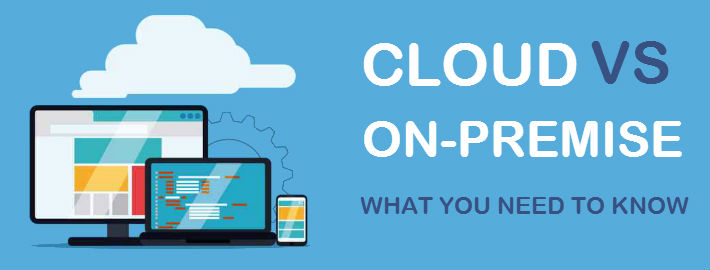
Cloud computing is here to stay. In recent years, there has been a near stampede to move software projects to the cloud from both vendors and buyers alike. The rise of Software as a Service (Saas) has opened up asset management software to new markets both geographically and in terms of the scope and style of solutions on offer. It can be easy to get caught up in the hype, but for many companies on-premise installations still offer a strong alternative. What are the benefits and pitfalls of cloud vs on-premise and which is the right option for your project?
Set-up and support
One of the big benefits of the cloud is the simplicity it offers in terms of set-up and support. The true extent of these benefits will depend on the complexity of the project and the nature of the software required.
Saas implementations for many types of software can be set-up quickly and simply in a matter of minutes. Just provide some basic details and a credit card and you can be up and running almost immediately. This type of model is ideal for relatively simple systems such as basic CRM, inventory or accounting packages. Asset management is typically more complex and is likely to require some additional configuration and training.
The impact on support requirements can be broken down into two different areas: infrastructure and software. In terms of infrastructure, there is a clear benefit to the cloud in that there are no requirements for you to source or maintain servers to run the software. Software support is less clear cut. Some vendors will offer phone, web and email support for both hosted and on-premise customers. For entry level cloud solutions, training and support may be limited to a few online guides and videos with email or web portal support.
Options at a glance:
Cloud:
✓ Quick and simple to get started
✓ No IT infrastructure required
✓ Free trials often provided
✘ DIY training and support
✘ Requires internet connection
On-premise:
✓ Access via LAN even without web access
✓ Greater control over the operating environment
✘ IT infrastructure support required
✘ Installation required on your server
Cost
Pricing models are typically very different for hosted and on-premise offerings. Here we look at three common models:
- Upfront (typically on-premise)
- Subscription or monthly (typically hosted or Saas)
- Hybrid pricing
Upfront payment has been the most common method of buying software until recently. Most on-premise sales will be priced based on an upfront payment for the software, consultancy and any hardware required. Vendors have little control over what happens once the software has been installed on your servers, so are often unwilling to offer subscription pricing in this case. Upfront payment usually works out to be the most efficient pricing model for the client in the long run but does require a bigger initial investment.
Subscription or monthly pricing is usually offered for hosted software and has dramatically changed how software is purchased in recent years. Lower or no upfront costs make it attractive in terms of capital expenditure (CapEx) and in terms of getting approval from management or finance teams. The simplicity of subscription pricing does come at a price however, you will need to cover the cost of hosting by the vendor as well as paying for the software itself. Importantly subscription software licenses are only granted for the duration of the subscription rather than in perpetuity as is typical for up-front payments.
Hybrid pricing works on a combination of the two options above. In some cases, it may be beneficial to purchase the software licenses upfront and also have the vendor provide hosting. Organisations who outsource their IT function, have limited IT resource or require access across a number of unconnected networks can all benefit from hybrid models.
Options at a glance:
Subscription (Cloud):
✓ Limited upfront investment
✓ Less capital expenditure (CapEx)
✓ Less or no IT infrastructure required
✘ More expensive over the project life
✘ Access only granted for the subscription period
Upfront (On-premise):
✓ More cost effective in the long term
✓ Licenses usually granted in perpetuity
✓ Lower ongoing costs
✘ Greater initial investment needed
✘ IT Infrastructure investment may be required
Scalability and future-proofing
A third area to consider is the scalability of the software and the life cycle of the project.
Hosted software offers a number of benefits to buyers in terms of scalability, especially at the lower end of the spectrum. Most systems allow you to add additional licenses as you grow, but reducing the number of licenses is normally more difficult. Because hosted subscription licenses are granted on a temporary basis and may be revised after the initial contract period, down-sizing is usually easier with these solutions.
Replacing or upgrading IT infrastructure can be expensive, so here again hosted software may be beneficial as you only pay for what you need. Self-hosting through a provider such as Amazon Web Services (AWS) may offer a cost-effective alternative to managing your own IT infrastructure.
Inclusive upgrades:
Unlike many providers FMIS provides all updates and upgrades including installation under the Support and Maintenance agreement for on-premise installations.
Future-proofing of software is an essential, but often ignored, element of any software project. Depending on the vendor, the software may be updated as frequently as every few months and updates may or may not be passed on to users automatically. Hosted software is more likely to include upgrades or updates as part of the standard contract. Implementing upgrades and updates for hosted software can be done remotely by the vendor, but this may not be as easy for on-premise and may require additional consultancy charges.
The only significant drawback to a hosted solution in this section is the dependence on the supplier for access to the software and data. If for any reason the supplier stops supporting or hosting the software, the client has little control over restoring the service or recovering lost data.
Options at a glance:
Cloud:
✓ Upgrades are usually included as standard
✓ Remote updates can be done more easily
✓ Limited IT infrastructure required
✘ Access dependent on the vendor
On-premise:
✓ Greater control over system access
✘ Updates may be less frequent and more complicated
✘ IT Infrastructure requirements may change
Security
One final area to consider is data security. 2015 through 2016 has seen an increase in the number of high-profile security breaches and this trend is only likely to continue. Asset management data may not hold the same sensitivity as personal data, but its value to the client is still significant and can still be highly confidential.
Data theft is not the only risk for hosted software. As mentioned above, access to the software, and in turn the data, is dependent on the hosting provider. Events such as DDOS (Distributed Denial of Service) attacks can mean lost productivity and lost data. It is always worth checking where and how your data will be stored and what guarantees (if any) the vendor will provide in relation to software uptime.
FMIS in the cloud
FMIS offers both hosted and on-premise solutions for all our modules. If you would like to speak with one of our consultants to better understand what options will suit your organisation best, we would be glad to speak with you. You can get in touch via the contact us page, email us at sales@fmis.co.uk or call the offices on +44 (0) 1227 773003.
 https://www.fmis.co.uk/wp-content/uploads/2026/09/FMIS-Lease-Accounting-version-12.47-product-update.webp
396
495
John de Robeck
https://www.fmis.co.uk/wp-content/uploads/2026/04/FMISNavyTeal-1-150x80-1.webp
John de Robeck2026-09-17 15:14:582026-09-17 15:15:01What is new in FMIS Lease Accounting version 12.47
https://www.fmis.co.uk/wp-content/uploads/2026/09/FMIS-Lease-Accounting-version-12.47-product-update.webp
396
495
John de Robeck
https://www.fmis.co.uk/wp-content/uploads/2026/04/FMISNavyTeal-1-150x80-1.webp
John de Robeck2026-09-17 15:14:582026-09-17 15:15:01What is new in FMIS Lease Accounting version 12.47 https://www.fmis.co.uk/wp-content/uploads/2026/09/FMIS-AccountMate-Integration-for-FMIS-Fixed-Assets.webp
450
495
John de Robeck
https://www.fmis.co.uk/wp-content/uploads/2026/04/FMISNavyTeal-1-150x80-1.webp
John de Robeck2026-09-09 17:48:582026-09-21 18:12:04AccountMate Fixed Asset Integration with FMIS
https://www.fmis.co.uk/wp-content/uploads/2026/09/FMIS-AccountMate-Integration-for-FMIS-Fixed-Assets.webp
450
495
John de Robeck
https://www.fmis.co.uk/wp-content/uploads/2026/04/FMISNavyTeal-1-150x80-1.webp
John de Robeck2026-09-09 17:48:582026-09-21 18:12:04AccountMate Fixed Asset Integration with FMIS https://www.fmis.co.uk/wp-content/uploads/2026/08/Asset-Depreciation-Methods-.webp
450
500
John de Robeck
https://www.fmis.co.uk/wp-content/uploads/2026/04/FMISNavyTeal-1-150x80-1.webp
John de Robeck2026-08-27 12:51:012026-09-22 08:30:14Asset Depreciation Methods Explained for UK Businesses
https://www.fmis.co.uk/wp-content/uploads/2026/08/Asset-Depreciation-Methods-.webp
450
500
John de Robeck
https://www.fmis.co.uk/wp-content/uploads/2026/04/FMISNavyTeal-1-150x80-1.webp
John de Robeck2026-08-27 12:51:012026-09-22 08:30:14Asset Depreciation Methods Explained for UK Businesses https://www.fmis.co.uk/wp-content/uploads/2026/03/Book-Value-Accumulated-Depreciation.webp
450
500
John de Robeck
https://www.fmis.co.uk/wp-content/uploads/2026/04/FMISNavyTeal-1-150x80-1.webp
John de Robeck2026-08-27 12:50:062026-09-28 05:18:31Net Book Value (NBV) Explained : Formula, Calculation, and Examples
https://www.fmis.co.uk/wp-content/uploads/2026/03/Book-Value-Accumulated-Depreciation.webp
450
500
John de Robeck
https://www.fmis.co.uk/wp-content/uploads/2026/04/FMISNavyTeal-1-150x80-1.webp
John de Robeck2026-08-27 12:50:062026-09-28 05:18:31Net Book Value (NBV) Explained : Formula, Calculation, and Examples https://www.fmis.co.uk/wp-content/uploads/2026/08/what-is-capital-allowance.webp
450
500
John de Robeck
https://www.fmis.co.uk/wp-content/uploads/2026/04/FMISNavyTeal-1-150x80-1.webp
John de Robeck2026-08-27 12:49:562026-09-28 05:12:35Capital Allowances Explained: A UK Guide for Businesses
https://www.fmis.co.uk/wp-content/uploads/2026/08/what-is-capital-allowance.webp
450
500
John de Robeck
https://www.fmis.co.uk/wp-content/uploads/2026/04/FMISNavyTeal-1-150x80-1.webp
John de Robeck2026-08-27 12:49:562026-09-28 05:12:35Capital Allowances Explained: A UK Guide for Businesses