Cloud Security & Infrastructure
Certifications and controls supporting security and compliance

FMIS solutions are typically delivered through a secure, cloud-based environment designed to protect data and maintain system availability. Security is applied at multiple levels, covering infrastructure, access, and application controls. If you require an on-premise installation, please contact us for more information.
All cloud systems are hosted within a secure, controlled environment. Development, support, and system management are handled by the FMIS team, providing consistent oversight across all deployments.

If you have questions about security, data protection, or require documentation for a review, get in touch with our team.
Email our team Privacy policy Cookie policy
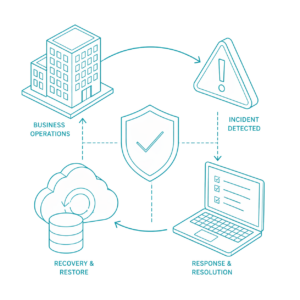
The platform is designed to provide reliable, continuous access.
These controls support service continuity and allow systems to be restored in the event of disruption.
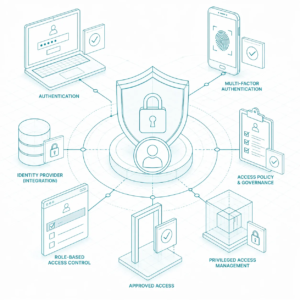
Access to FMIS systems is controlled through defined user permissions and authentication measures.
This ensures that users have access only to the information and functions relevant to their role.

Data is protected through a combination of encryption and application-level controls.
These measures help protect data throughout its lifecycle.
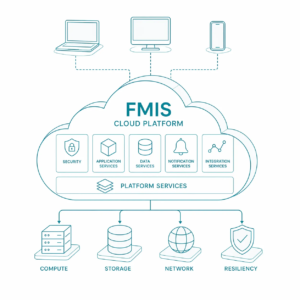
Infrastructure is protected through layered security controls.
These controls help detect and prevent unauthorised access or abnormal behaviour.
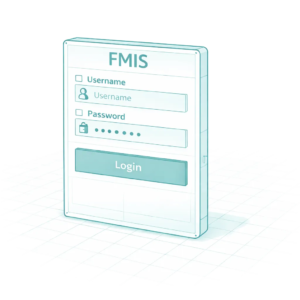
FMIS systems are designed to be accessible without compromising security.
This allows users to access the system where required, while maintaining control over how access is granted.

FMIS cloud solutions are typically hosted in the UK, with data stored and managed within a secure, controlled environment. In some cases, on-premise or client-hosted deployments are also supported where required.
This provides:
Client data is not passed outside of FMIS for processing without prior agreement. While systems are accessed by organisations internationally, hosting and operational control are typically UK-based.
If you require additional detail on hosting, security controls, or infrastructure, please contact:
 https://www.fmis.co.uk/wp-content/uploads/2026/09/FMIS-Lease-Accounting-version-12.47-product-update.webp
396
495
John de Robeck
https://www.fmis.co.uk/wp-content/uploads/2026/04/FMISNavyTeal-1-150x80-1.webp
John de Robeck2026-09-17 15:14:582026-09-17 15:15:01What is new in FMIS Lease Accounting version 12.47
https://www.fmis.co.uk/wp-content/uploads/2026/09/FMIS-Lease-Accounting-version-12.47-product-update.webp
396
495
John de Robeck
https://www.fmis.co.uk/wp-content/uploads/2026/04/FMISNavyTeal-1-150x80-1.webp
John de Robeck2026-09-17 15:14:582026-09-17 15:15:01What is new in FMIS Lease Accounting version 12.47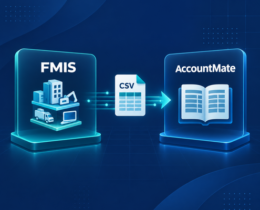 https://www.fmis.co.uk/wp-content/uploads/2026/09/FMIS-AccountMate-Integration-for-FMIS-Fixed-Assets.webp
450
495
John de Robeck
https://www.fmis.co.uk/wp-content/uploads/2026/04/FMISNavyTeal-1-150x80-1.webp
John de Robeck2026-09-09 17:48:582026-09-21 18:12:04AccountMate Fixed Asset Integration with FMIS
https://www.fmis.co.uk/wp-content/uploads/2026/09/FMIS-AccountMate-Integration-for-FMIS-Fixed-Assets.webp
450
495
John de Robeck
https://www.fmis.co.uk/wp-content/uploads/2026/04/FMISNavyTeal-1-150x80-1.webp
John de Robeck2026-09-09 17:48:582026-09-21 18:12:04AccountMate Fixed Asset Integration with FMIS https://www.fmis.co.uk/wp-content/uploads/2026/03/Book-Value-Accumulated-Depreciation.webp
450
500
John de Robeck
https://www.fmis.co.uk/wp-content/uploads/2026/04/FMISNavyTeal-1-150x80-1.webp
John de Robeck2026-08-27 12:50:062026-09-28 05:18:31Net Book Value (NBV) Explained : Formula, Calculation, and Examples
https://www.fmis.co.uk/wp-content/uploads/2026/03/Book-Value-Accumulated-Depreciation.webp
450
500
John de Robeck
https://www.fmis.co.uk/wp-content/uploads/2026/04/FMISNavyTeal-1-150x80-1.webp
John de Robeck2026-08-27 12:50:062026-09-28 05:18:31Net Book Value (NBV) Explained : Formula, Calculation, and Examples https://www.fmis.co.uk/wp-content/uploads/2026/08/what-is-capital-allowance.webp
450
500
John de Robeck
https://www.fmis.co.uk/wp-content/uploads/2026/04/FMISNavyTeal-1-150x80-1.webp
John de Robeck2026-08-27 12:49:562026-09-28 05:12:35Capital Allowances Explained: A UK Guide for Businesses
https://www.fmis.co.uk/wp-content/uploads/2026/08/what-is-capital-allowance.webp
450
500
John de Robeck
https://www.fmis.co.uk/wp-content/uploads/2026/04/FMISNavyTeal-1-150x80-1.webp
John de Robeck2026-08-27 12:49:562026-09-28 05:12:35Capital Allowances Explained: A UK Guide for Businesses
