What is depreciation?
| Depreciation is the accounting process of spreading the cost of a fixed asset across the years it is used, rather than charging the full cost in the year of purchase. It reflects the loss in value as an asset is consumed, wears out, or becomes obsolete. |
Every fixed asset with a limited useful life is depreciated, from laptops and vehicles to plant and buildings. The exception is land, which is not usually depreciated because it does not have a finite life. The point of depreciation is to match the cost of an asset against the income it helps to generate, so the accounts give a fair picture of both profit and asset value in any given period. The starting figures you need are the same regardless of method: the cost of the asset, its estimated useful life, and its residual value at the end of that life.
The main depreciation methods at a glance
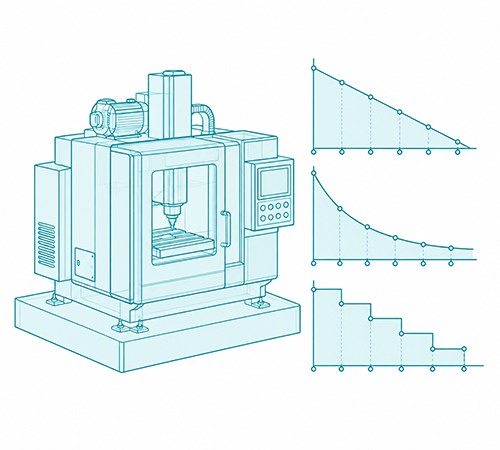
There are four depreciation methods in common use. The two you will meet most often in UK accounts are straight line and reducing balance. The table below sets out how each behaves before we work through them individually.
| Method |
How the charge behaves |
Best suited to |
| Straight line |
Equal charge every year |
Buildings, fixtures, office equipment |
| Reducing balance |
Higher charge early, tapering later |
Vehicles, IT hardware, plant that loses value fast |
| Units of production |
Charge tracks actual usage or output |
Machinery with measurable output, tooling |
| Sum of the digits |
Accelerated, weighted toward early years |
Assets front-loading their economic benefit |
Straight line depreciation
| Straight line depreciation charges an equal amount of an asset’s cost to each year of its useful life. You subtract the residual value from the cost and divide the result by the number of years the asset will be used. |
The formula is straightforward: annual depreciation equals cost minus residual value, divided by useful life in years. A machine bought for £24,000 with a £4,000 residual value and a five-year life depreciates at £4,000 a year. That predictability is exactly why straight line is the default choice for most UK businesses. It suits assets that deliver a steady stream of benefit over time, such as office fit-outs, furniture, and buildings, and it makes budgeting simple because the charge never changes.
The trade-off is that straight line assumes an asset loses value evenly, which is rarely true of something like a vehicle or a laptop that drops sharply in value the moment it is used. Where that is the case, reducing balance often gives a truer picture.
Reducing balance depreciation
| Reducing balance depreciation applies a fixed percentage to the asset’s remaining net book value each year, so the charge is largest in the first year and gets smaller over time. It front-loads the cost to match assets that lose value quickly early on. |
Take that same £24,000 asset with a 25% reducing balance rate. The first year’s charge is £6,000, leaving a net book value of £18,000. The second year is 25% of £18,000, or £4,500, and so on. The calculation does not naturally reach a defined residual value, so an end-of-life adjustment or policy control may be needed to prevent the asset being depreciated below that amount. This method reflects reality for vehicles, IT hardware, and plant, where the heaviest fall in value happens in the early years of ownership. Our worked example of how to calculate depreciation for IT equipment shows this pattern in detail.
Units of production depreciation
Units of production ties the depreciation charge to how much an asset is actually used, rather than to the passage of time. You work out a cost per unit, then multiply by the units produced in the period. A press expected to produce two million units over its life, bought for £200,000 with no residual value, carries a charge of ten pence per unit. Run 300,000 units in a year and the charge is £30,000; a quiet year with 100,000 units costs £10,000. This gives the fairest match between cost and output, which makes it valuable for manufacturers, though it only works where output is genuinely measured.
Sum of the digits depreciation
Sum of the digits is an accelerated method that weights more of the cost into the early years. You add up the digits of the useful life, so a five-year asset gives 5 plus 4 plus 3 plus 2 plus 1, which is 15, then charge that fraction of the depreciable amount each year, working down from the highest. Year one charges five-fifteenths, year two charges four-fifteenths, and so on. It is less common in UK practice than straight line or reducing balance, but it has a place where an asset clearly delivers most of its value early in its life.
Which depreciation method should you choose?
| Choose the method that best reflects how each asset is consumed, not the one that is easiest to apply across the board. UK accounting standards require the basis to match the pattern of economic benefit, so most businesses use more than one method across their register. |
Under FRS 102, the standard most UK companies report under, there is no single prescribed method. What the standard does require is that you pick a systematic basis reflecting how the asset’s benefits are used up, apply it consistently, and review the estimates and method in accordance with the applicable reporting framework, particularly where circumstances or the expected pattern of consumption change. Where a review identifies a significant change in the pattern of use, the method should be updated prospectively, and that reassessment is where a formal depreciation review earns its keep. In practice, a typical register might apply straight line to premises, reducing balance to the vehicle fleet, and units of production to production machinery, all at once. Depreciation is also distinct from asset valuation, which sets what an asset is worth today rather than how its cost is spread.
Fixed asset management software can apply configured depreciation rules consistently across a mixed register and retain an audit trail of approved changes. Claims about the methods supported and automatic recalculation should match the software’s confirmed functionality.
Common depreciation mistakes to avoid
- Setting the useful life once and never revisiting it, which quietly misstates both profit and asset value.
- Applying one method to every asset out of habit, when a mixed approach would give a fairer view.
- Ignoring residual value, which overstates the depreciation charge.
- Losing track of fully depreciated assets still in use, a fast route to a register full of ghost assets.
Residual value and useful life: the two inputs behind every method
| Every depreciation method relies on two estimates: the asset’s useful life, meaning how long it will be used, and its residual value, meaning what it will be worth at the end. Get these wrong and even the right method produces the wrong charge. |
Useful life is the number of years, or units of output, over which the asset will earn its keep. Residual value, sometimes called salvage value, is the amount you expect to recover when you dispose of it. The depreciable amount is simply the cost minus the residual value, and that is what each method spreads. Because both figures are estimates made at the point of purchase, they drift. A vehicle kept longer than planned, or a machine that holds its value better than expected, changes the picture. They should therefore be reviewed in accordance with the applicable reporting framework, particularly where circumstances indicate that the estimates may have changed, with any revised charge applied prospectively.
Straight line vs reducing balance: a side-by-side view
Because the two methods dominate UK practice, it helps to see them on the same asset. Take the £24,000 machine with a £4,000 residual value and a five-year life, and compare straight line against a 25% reducing balance rate.
| Year |
Straight line charge |
Reducing balance charge |
| Year 1 |
£4,000 |
£6,000 |
| Year 2 |
£4,000 |
£4,500 |
| Year 3 |
£4,000 |
£3,375 |
| Year 4 |
£4,000 |
£2,531 |
| Year 5 |
£4,000 |
£1,898 |
Straight line charges the same £4,000 every year. Reducing balance front-loads the cost, charging half as much again in year one but tapering below the straight line figure by year three. After five years, the reducing-balance method leaves a higher net book value unless an end-of-life adjustment is made. The timing and the total charged by that date therefore differ from straight line.
How depreciation appears on the financial statements
| Depreciation appears in two places: the annual charge is an expense in the profit and loss account, and the running total, accumulated depreciation, is deducted from cost on the balance sheet to give net book value. |
This dual presence is what makes depreciation easy to misread. The charge reduces reported profit each year, yet no cash actually leaves the business, which is why it is added back when preparing the cash flow statement. On the balance sheet, accumulated depreciation grows year on year and pulls the asset’s net book value down towards its residual value. Reading the two together tells you not just what an asset is worth in the accounts, but how much of its cost has already been used up.
Depreciation vs amortisation
The two terms describe the same idea applied to different assets. Depreciation spreads the cost of tangible fixed assets, such as machinery, vehicles, and equipment. Amortisation does the same job for intangible assets, such as software licences, patents, and goodwill. The methods are broadly similar, with the straight line approach being the most common for intangibles, but keeping the language straight matters when reading or preparing accounts.
Depreciation is one of the foundations of fixed asset management, shaping the balance sheet and supporting replacement decisions.