How to Calculate the Useful Life of an Asset
Calculating the useful life of an asset is essential. Here’s how and why to do it.
Written by: John de Robeck • Published: January 4, 2023 • Updated: March 10, 2026
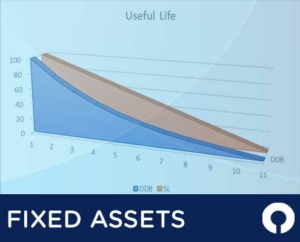

Despite our hopes and best efforts, fixed assets don’t last forever. Equipment gains wear and tear; machinery becomes outdated or obsolete; there comes a point where repairing an asset simply becomes less cost-effective than replacing it. Even the best-maintained building or piece of land will eventually stop contributing to revenue and become a money sink instead.
To acknowledge this reality, calculating an asset’s useful life is important. In this article, we’ll take a closer look at what useful life is, what impacts it, why it’s important, and how to calculate it.
An asset’s useful life is the estimation of how long it can be used for in order to be beneficial to the company — in other words, the amount of time that it can be used to generate revenue. While an asset such as a piece of machinery, vehicle, or equipment may be operational for many years, the asset’s useful life is often shorter.
It’s important to note that when we talk about the useful life of assets, we’re talking specifically about fixed assets. These are typically assets that are used by an organisation to generate revenue for longer than a year, for example, the equipment used to manufacture a product. In contrast, a product that is manufactured and sold for profit is a current asset. It’s not important to calculate the useful life of a current asset because these are usually expected to be disposed of or sold within a year.
Let’s take the example of a vehicle. A tangible asset that can often be used for many years, vehicles nonetheless gain wear and tear over time, might need to be fixed or have parts replaced, or might simply become obsolete due to technological improvements. At some point, the cost of repairing the vehicle will outweigh the value that the asset generates for the business. So, although the vehicle technically can still undergo maintenance and repairs for continued use (its actual lifespan), this becomes so costly that the asset turns into a liability. Therefore, the asset has reached the end of its useful life.
An asset is assigned a useful life when acquired, but this life span may change for various reasons. This is called a re-life. Typically, an asset will be re-lifed when something happens to the asset, which means the useful life will be shorter or longer than originally planned. A vehicle may have an initial useful life of five years, but after three years, it is decided that the vehicle’s useful life can be extended by another five years through scheduled maintenance. In this case, the previous depreciation periods remain unchanged, but future periods will be adjusted to reflect the new lifespan based on the current net book value (NBV).
The exact same asset may have a different useful life when used by different businesses. For example, a piece of machinery that is expected to have a useful life of ten years by one company may have a longer useful life in a different organisation. This is because useful life is impacted by a range of factors, including how frequently the business uses the asset and how complex equipment is maintained.
Even the condition and location of the business environment can impact an asset’s useful life – for example, if the asset is located in an area prone to natural disasters or extreme climate, this can also have an impact on the useful life calculation.
Technological improvements can also impact the useful life of an asset if it is likely to become obsolete soon. In this case, for example, the asset itself may still be operational, but other more up-to-date assets may be in use, making it more costly to continue using an outdated and incompatible asset than to replace it with a new one.
Finally, wider changes can also impact the useful life of an asset. For example, an economic or legal change may be a factor in estimating useful life.
Useful life estimates are important in accounting for a few reasons. Firstly, the estimate allows you to decide how long to keep an asset before replacing it. As well as helping you plan maintenance schedules and methods, this also allows you to make informed decisions about whether to repair or replace the asset towards the end of its useful life.
For example, if a piece of equipment has a useful life of five years but needs major and costly repairs after four and a half years, the useful life is a factor in deciding whether to repair or replace it.
Useful life calculations are also important in financial planning and forecasting because they provide an indication of when a replacement asset will need to be purchased. This means that budgets can be created accordingly.
Moreover, it’s important to calculate useful life for accurate depreciation calculations. Depreciation spreads the cost of an asset over its useful life and reflects the changing value of the asset over time.
To demonstrate the importance of useful life in calculating how an asset depreciates in value over time, let’s look at the example of the straight-line depreciation method. This is the most common method of depreciation and is very straightforward to calculate because the expense amount is the same every year of the asset’s useful life. The formula for the straight-line method is as follows:
Annual depreciation expense = (cost of the asset – salvage value) / useful life of the asset
In other words, to find the annual depreciation expense of an asset, first subtract the salvage value from its purchase price, then divide this figure by the useful life.
Besides straight-line, other depreciation methods include double-declining balance, units of production, and sum of years depreciation. All these depreciation methods are calculated using the asset’s useful life.
Unlike the various methods for depreciation, there’s no single formula to determine the useful life of an asset – it’s an estimated number rather than an exact calculation. The useful life will be different for the same asset in the same condition if it is used in different ways, businesses, and locations.
Despite this, there are some useful resources that can make it easier to calculate useful life. The United States Internal Revenue Service (IRS) has a list of useful lives and depreciation standards for most types of tangible assets. Other industry bodies provide estimates for assets specific to different sectors, such as real estate, oil, gas and energy, or manufacturing.
Furthermore, some types of assets—such as machinery—have a specified expiration date, which provides an indication of the useful lifespan. Equipment manuals may provide this information. Sometimes the estimated lifespan as given by the manufacturer is given in hours or cycles, which means that you can estimate a more accurate useful life based on how frequently the asset is used. Of course, the useful life may not be equivalent to the expiration date, but this is a good starting point.
Then, it’s important to incorporate other factors that impact useful life, such as the condition of the asset (was it new or used when you bought it?), the location (is it somewhere prone to humidity, earthquakes, or any other conditions that might shorten its useful life?), and the maintenance method your organisation uses (do you use preventative maintenance, reactive maintenance, or another type?).
If your organisation has owned the same asset in the past, the useful lifespan of this asset or assets can also inform the estimate for the new one. If the asset always lasts longer than the IRS’ estimations, for example, this can be taken into account.
However, even once you’ve taken all of these factors into account, there are still other unpredicted changes that can impact the useful life of an asset. This is where adjustments come into play. As discussed above, the useful life estimate for an asset may have to be adjusted or re-lifed as time goes on.
With the estimated useful life of an asset liable to change over time, it’s important to have an effective asset management strategy using powerful software to keep track of your assets throughout their lifecycles.
For example, the FMIS Fixed Asset Management Solution provides a full-featured customisable database for all your asset information while automating depreciation accounting and empowering your team. With our fixed asset management module, it’s easier than ever to record assets’ full history of adjustments, transfers, disposals, and other events. Moreover, it’s possible to work across multiple companies, countries, and books with ease using the flexible and intuitive tool.


 https://www.fmis.co.uk/wp-content/uploads/2024/03/SoftwareSuggest-Awards-2024-495x400-1.webp
400
495
John de Robeck
https://www.fmis.co.uk/wp-content/uploads/2026/04/FMISNavyTeal-1-150x80-1.webp
John de Robeck2024-03-26 10:29:322026-03-10 10:57:34SoftwareSuggest Awards – FMIS recognised for easy implementation
https://www.fmis.co.uk/wp-content/uploads/2024/03/SoftwareSuggest-Awards-2024-495x400-1.webp
400
495
John de Robeck
https://www.fmis.co.uk/wp-content/uploads/2026/04/FMISNavyTeal-1-150x80-1.webp
John de Robeck2024-03-26 10:29:322026-03-10 10:57:34SoftwareSuggest Awards – FMIS recognised for easy implementation https://www.fmis.co.uk/wp-content/uploads/2023/10/Asset-Valuation-Methods-495x400-1.jpg
400
495
John de Robeck
https://www.fmis.co.uk/wp-content/uploads/2026/04/FMISNavyTeal-1-150x80-1.webp
John de Robeck2023-10-26 13:16:202026-07-01 10:14:59Asset Valuation Methods
https://www.fmis.co.uk/wp-content/uploads/2023/10/Asset-Valuation-Methods-495x400-1.jpg
400
495
John de Robeck
https://www.fmis.co.uk/wp-content/uploads/2026/04/FMISNavyTeal-1-150x80-1.webp
John de Robeck2023-10-26 13:16:202026-07-01 10:14:59Asset Valuation Methods https://www.fmis.co.uk/wp-content/uploads/2019/06/Feature-image-495x400.jpg
400
495
John de Robeck
https://www.fmis.co.uk/wp-content/uploads/2026/04/FMISNavyTeal-1-150x80-1.webp
John de Robeck2019-12-18 11:23:412026-03-10 11:09:42FMIS announces new NHS partnership
https://www.fmis.co.uk/wp-content/uploads/2019/06/Feature-image-495x400.jpg
400
495
John de Robeck
https://www.fmis.co.uk/wp-content/uploads/2026/04/FMISNavyTeal-1-150x80-1.webp
John de Robeck2019-12-18 11:23:412026-03-10 11:09:42FMIS announces new NHS partnership https://www.fmis.co.uk/wp-content/uploads/2019/11/Govmoney2019-495x400.jpg
400
495
John de Robeck
https://www.fmis.co.uk/wp-content/uploads/2026/04/FMISNavyTeal-1-150x80-1.webp
John de Robeck2019-12-02 17:25:102026-03-10 11:09:51FMIS to sponsor GovMoney 2019
https://www.fmis.co.uk/wp-content/uploads/2019/11/Govmoney2019-495x400.jpg
400
495
John de Robeck
https://www.fmis.co.uk/wp-content/uploads/2026/04/FMISNavyTeal-1-150x80-1.webp
John de Robeck2019-12-02 17:25:102026-03-10 11:09:51FMIS to sponsor GovMoney 2019


 How to Calculate Depreciation for IT Equipment