What is Capital Asset Management Software (CAM)?
What is Capital Asset Management, who uses it, and why is it important for your organisation?.
Written by: John de Robeck • Published: December 9, 2024 • Updated: September 22, 2026


Capital Asset Management Software (CAM) is essential for organisations managing long-term physical assets such as equipment, vehicles, and property. By focusing on the complete lifecycle of capital assets, CAM ensures optimal usage, maintenance, and compliance with financial regulations. It differs from general asset management systems by emphasising depreciation tracking, lifecycle analysis, and detailed financial planning. CAM provides a strategic advantage for businesses with substantial asset investments in reducing operating costs and streamlining asset disposal processes.

Capital Asset Management Software is essential in many industries and sectors. Finance departments use CAM to manage compliance, depreciation, and budgeting effectively, ensuring accurate financial reporting and strategic planning. Asset managers leverage their capabilities to track asset status, lifecycle, and performance, enabling informed operational decisions. Maintenance teams benefit from its features to strategically forecast maintenance needs, reduce downtime costs, and replace ageing fleet or equipment.
Manufacturing, healthcare, transportation and almost any asset-intensive industries rely heavily on CAM software. For example, hospitals use it to manage high-value medical equipment, while logistics companies depend on it to oversee fleet assets and optimise replacement schedules. CAM ensures that businesses in diverse fields maintain compliance and streamline asset distribution efficiently.
Capital Asset Management Software is designed to simplify asset management processes and enhance operational efficiency. At its core, CAM includes asset tracking and register management, maintaining an up-to-date record of all physical and intangible assets. Its lifecycle management capabilities enable the tracking of assets from acquisition to disposal, ensuring effective asset lifecycle management.
Features like depreciation management and detailed lifecycle cost analysis empower organisations to make smarter budget justification decisions and maintain compliance with financial standards.

While Capital Asset Management and Fixed Asset Management are often used interchangeably, they have nuanced differences that are important to understand. Capital asset management refers to the broader process of managing an organisation’s long-term assets, including not only physical assets like equipment and buildings but also financial considerations such as capital budgets and lifecycle cost analysis. It focuses on ensuring the optimal allocation and utilisation of resources over time.
On the other hand, fixed asset management is a subset of capital asset management, primarily dealing with tangible, long-term physical assets such as machinery, vehicles, and real estate. Fixed asset management places greater emphasis on tracking asset depreciation, compliance with financial reporting standards, and maintaining an accurate asset register.
In essence, fixed asset management is a critical component of the more comprehensive scope of capital asset management. While both processes overlap in areas like asset lifecycle management and tracking replacement schedules, capital asset management encompasses a wider strategic focus, including aligning assets with organisational goals and future forecasting.
Capital Asset Management Software offers distinct advantages over general asset management tools by focusing specifically on capital-intensive resources. Unlike broader asset management systems, CAM emphasises financial compliance and precise depreciation management, making it indispensable for accurate reporting and budgeting. This capability is critical for aligning with financial regulations and minimising errors in asset tracking processes.
While CAM Software offers tracking capabilities for physical assets such as machinery and fleet vehicles, its primary focus lies in asset management’s financial and accounting aspects. For businesses prioritising equipment maintenance, scheduling, or reducing downtime costs, other types of fixed asset software such as asset tracking, equipment maintenance, or Computerised Maintenance Management Systems (CMMS) may be better suited. However, CAM excels in tracking lifecycle processes like forecasting, acquisition and disposal, ensuring that organisations can efficiently replace ageing vehicles or equipment while maintaining financial accuracy and aligning asset management with broader strategic goals.
Capital Asset Management Software (CAM) is designed to address the financial and strategic elements of asset management, making it a critical tool for businesses managing significant capital investments. Key applications include:
These financial-focused applications make CAM a vital component for organisations aiming to optimise their asset investments while maintaining compliance and financial accuracy.
Choosing the right Capital Asset Management Software involves identifying features that align with your organisation’s specific requirements. Scalability is essential, ensuring the system can handle a growing asset base and adapt to organisational changes. Strong reporting capabilities are another critical feature, offering insights into asset depreciation, lifecycle cost analysis, and budget forecasting to support informed financial planning and smarter budget justification.
For organisations managing substantial physical assets, CAM should provide effective tools for tracking asset acquisitions, disposals, and transfers. Systems with cloud-based deployment options enhance accessibility, allowing users to securely access asset data in real-time, whether in the office or the field. While CAM focuses primarily on the financial aspects of asset management, integration capabilities—such as linking with ERP or accounting software—may streamline data flow between departments, supporting efficient decision-making and compliance.

Organisations using CAM Software often report measurable efficiency and cost savings improvements. For example, according to Gartner, effective CAM implementation can reduce operating costs by as much as 30% through improved maintenance scheduling and asset tracking. Additionally, streamlined processes can save businesses up to 20 hours per month in managing fixed assets.
The software enhances compliance by automating depreciation calculations and providing accurate financial data for reporting. It also ensures better decision-making by delivering insights into asset performance, helping businesses optimise their asset lifecycle management. These metrics underscore CAM’s value in reducing costs, improving operational efficiency, and achieving smarter budget justification.
CAM Software is inherently integrated into the broader business ecosystem. While finance teams often manage or own the system, its effectiveness relies heavily on collaboration with other departments, such as operations and IT. For example, operations teams provide critical data on asset performance and usage, while IT ensures the system is technically sound and secure. This interdependence highlights the importance of maintaining clear communication and shared processes across the organisation.
Some organisations enhance their CAM systems with automated integrations. For instance, linking the software to capital purchase order systems or automating journal exports can reduce manual workloads and improve efficiency. However, automated integrations require ongoing maintenance and may not always be the best choice, depending on the complexity and resource availability of the organisation.
In terms of deployment, there is a growing trend towards cloud-based solutions, which offer scalability, accessibility, and robust security. Cloud systems allow users to access critical asset data from mobile devices or remote locations, supporting fieldwork and collaboration. That said, hosting the software locally can also provide benefits, such as greater control, reduced ongoing costs, or enhanced security for organisations with specific compliance or operational needs.
The CAM software landscape of continues to evolve, with a growing focus on cloud-based solutions. Cloud hosting has proven to significantly enhance the accessibility and security of CAM systems, enabling users to manage assets efficiently in the field and from almost any device. This capability ensures real-time updates and seamless collaboration, empowering teams to make informed decisions wherever they are.
By leveraging cloud-based technology, businesses can improve system scalability while maintaining robust data security. These advancements are especially beneficial for organisations managing large, distributed asset portfolios, as they facilitate streamlined workflows and ensure that critical asset data is always at their fingertips.
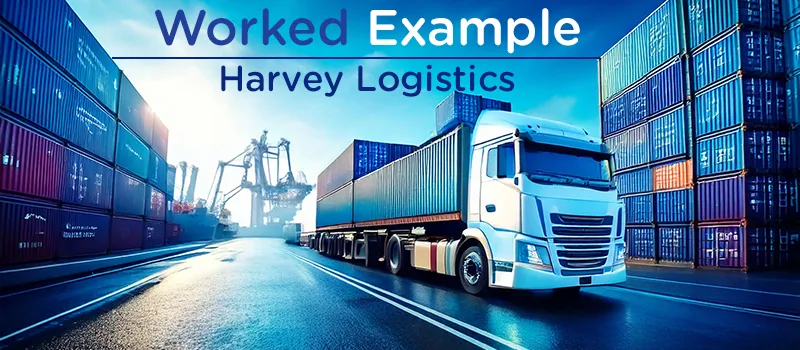
Harvey Logistics, a multinational logistics company with operations in the United States, UK, and Ireland, relies heavily on its fleet of vehicles and ships. The company’s capital assets represent the largest line item on its balance sheet, necessitating precise financial management to maintain profitability and compliance. Here’s how CAM could be applied at each stage of the asset management process:
Harvey Logistics uses CAM to analyse historical data and trends, projecting future asset needs. For example, the system evaluates the lifecycle costs of owned ships versus leased containers to determine whether purchasing additional assets is more cost-effective. These forecasts inform capital budgets and ensure alignment with strategic business objectives.
When acquiring new assets, CAM integrates with Harvey’s ERP system to automatically record purchase orders. For instance, if the company decides to buy five new vehicles for its UK fleet, CAM logs each acquisition, assigns asset IDs, and records the purchase value for future depreciation tracking. This integration reduces manual data entry errors and ensures seamless financial reporting.
Throughout the lifecycle of its assets, Harvey uses CAM to monitor expenses associated with each vehicle and ship. For example, CAM tracks fuel costs, lease payments for containers, and maintenance expenses. These insights help the finance team identify high-cost assets that may need early replacement, enabling better budget allocation.
CAM automates depreciation calculations based on asset types and locations, ensuring compliance with local accounting standards. For example, a ship in the US may follow a different depreciation schedule than a vehicle in the UK. By accurately calculating depreciation, Harvey ensures precise reporting in financial statements and compliance during audits.
Harvey’s finance team generates comprehensive reports using CAM, detailing asset values, depreciation schedules, and lifecycle costs. These reports are essential during audits and for meeting regulatory requirements in different countries. For example, CAM provides an audit trail for leased containers, demonstrating compliance with lease accounting standards.
As assets reach the end of their useful life, CAM supports Harvey in planning replacements or disposals. For instance, CAM identifies ships with high operating costs and recommends replacement schedules. The software also calculates the residual value of assets, streamlining asset disposal and ensuring accurate financial adjustments.
By applying CAM at every stage of its asset management process, Harvey Logistics achieves precise financial oversight, improved capital budgeting, and compliance with international regulations. This approach ensures that the company maximises the value of its capital assets while maintaining operational efficiency.
Capital Asset Management Software is indispensable for organisations managing significant asset investments. By streamlining asset management processes, enhancing compliance, and optimising lifecycle costs, CAM ensures that businesses can maximise the value of their physical assets while minimising operational disruptions.
The software’s ability to integrate with financial and maintenance systems makes it a comprehensive solution for aligning asset performance with organisational goals. With benefits like reduced downtime costs, smarter budget justification, and improved asset tracking, CAM empowers businesses to make informed decisions and achieve long-term financial efficiency.
Adopting CAM software is not just about managing assets—it’s about unlocking opportunities for growth and sustainability. Organisations ready to embrace these tools can expect better operational control and financial outcomes.
FMIS provides comprehensive solutions designed to support effective asset management. Learn how our Capital Asset Management Software can help streamline processes and improve your organisation’s financial accuracy.
Contact us today for a demo or more information:
 https://www.fmis.co.uk/wp-content/uploads/2024/03/SoftwareSuggest-Awards-2024-495x400-1.webp
400
495
John de Robeck
https://www.fmis.co.uk/wp-content/uploads/2026/04/FMISNavyTeal-1-150x80-1.webp
John de Robeck2024-03-26 10:29:322026-03-10 10:57:34SoftwareSuggest Awards – FMIS recognised for easy implementation
https://www.fmis.co.uk/wp-content/uploads/2024/03/SoftwareSuggest-Awards-2024-495x400-1.webp
400
495
John de Robeck
https://www.fmis.co.uk/wp-content/uploads/2026/04/FMISNavyTeal-1-150x80-1.webp
John de Robeck2024-03-26 10:29:322026-03-10 10:57:34SoftwareSuggest Awards – FMIS recognised for easy implementation https://www.fmis.co.uk/wp-content/uploads/2023/10/Asset-Valuation-Methods-495x400-1.jpg
400
495
John de Robeck
https://www.fmis.co.uk/wp-content/uploads/2026/04/FMISNavyTeal-1-150x80-1.webp
John de Robeck2023-10-26 13:16:202026-07-01 10:14:59Asset Valuation Methods
https://www.fmis.co.uk/wp-content/uploads/2023/10/Asset-Valuation-Methods-495x400-1.jpg
400
495
John de Robeck
https://www.fmis.co.uk/wp-content/uploads/2026/04/FMISNavyTeal-1-150x80-1.webp
John de Robeck2023-10-26 13:16:202026-07-01 10:14:59Asset Valuation Methods https://www.fmis.co.uk/wp-content/uploads/2019/06/Feature-image-495x400.jpg
400
495
John de Robeck
https://www.fmis.co.uk/wp-content/uploads/2026/04/FMISNavyTeal-1-150x80-1.webp
John de Robeck2019-12-18 11:23:412026-03-10 11:09:42FMIS announces new NHS partnership
https://www.fmis.co.uk/wp-content/uploads/2019/06/Feature-image-495x400.jpg
400
495
John de Robeck
https://www.fmis.co.uk/wp-content/uploads/2026/04/FMISNavyTeal-1-150x80-1.webp
John de Robeck2019-12-18 11:23:412026-03-10 11:09:42FMIS announces new NHS partnership https://www.fmis.co.uk/wp-content/uploads/2019/11/Govmoney2019-495x400.jpg
400
495
John de Robeck
https://www.fmis.co.uk/wp-content/uploads/2026/04/FMISNavyTeal-1-150x80-1.webp
John de Robeck2019-12-02 17:25:102026-03-10 11:09:51FMIS to sponsor GovMoney 2019
https://www.fmis.co.uk/wp-content/uploads/2019/11/Govmoney2019-495x400.jpg
400
495
John de Robeck
https://www.fmis.co.uk/wp-content/uploads/2026/04/FMISNavyTeal-1-150x80-1.webp
John de Robeck2019-12-02 17:25:102026-03-10 11:09:51FMIS to sponsor GovMoney 2019




 What is a Depreciation Review and when is it needed?