Case Study
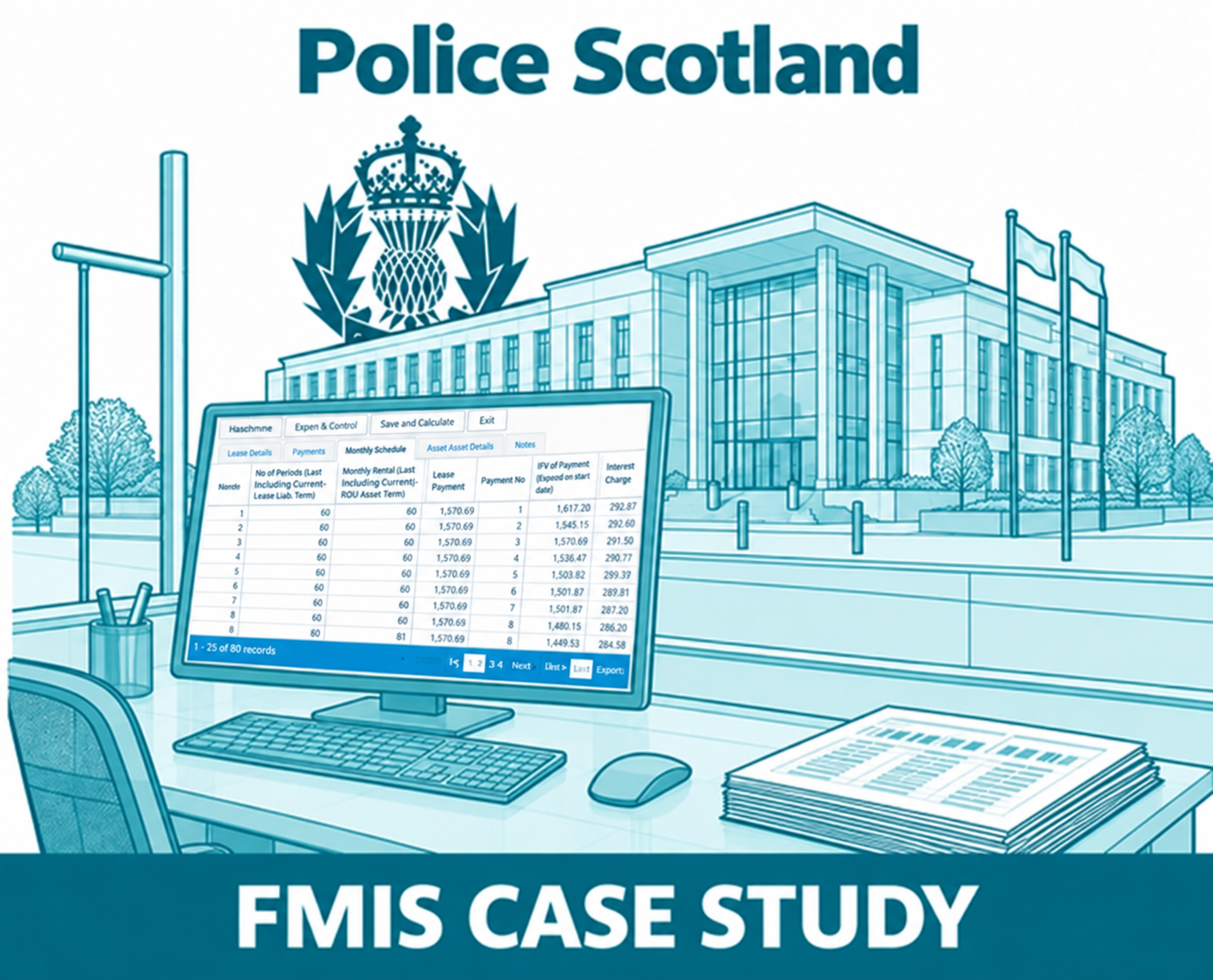
Police Scotland Lease Accounting Case Study: See how the force cuts month-end report production to 20 minutes with FMIS Lease Accounting
Written by: John de Robeck • Published: October 30, 2026 • Updated: October 30, 2026

Case Study
Written by: John de Robeck • Published: October 30, 2026 • Updated: October 30, 2026
Police Scotland’s Statutory Reporting Team reports that month-end lease report production fell from four hours to 20 minutes after replacing a complex spreadsheet-based method with FMIS Lease Accounting. Year-end processing reduced from three days to one day.
The project combined lease data migration, reconciliation, practical training and report configuration. For public-sector finance teams reviewing their own processes, it shows how specialist software and implementation support can reduce administration while improving access to lease information.



Challenges



| Measure | Customer-reported result |
|---|---|
| Month-end report production | Reduced from four hours to 20 minutes |
| Year-end processing | Reduced from three days to one day |
| Manual administration | More than 50% less time or effort |
| Spreadsheets and separate manual records | More than 10 replaced or materially reduced |
| Staff time saved across the relevant team | Estimated at 5–10 hours in a typical month |
Figures are drawn from the customer’s benefits and outcomes questionnaire and refer to the named reporting processes. Staff-time and administration savings are customer estimates.
The Statutory Reporting Team used spreadsheets to manage lease accounting and produce financial reports. The customer described the method as complex and noted that the manual workload would have increased over time.
The move to FMIS addressed the administration involved in monthly reporting and year-end processing, alongside the need for consistent lease data, accessible financial information and an audit trail supporting IFRS 16 reporting.
Existing lease data was transferred from the spreadsheets into the FMIS import file and uploaded to the system. The leases were loaded at an agreed transition point, including their future payments and the lease liability from that date. FMIS used this information to generate the associated right-of-use assets.
The team then used FMIS lease summary and reconciliation reports to compare the imported lease data with the spreadsheet values. This provided a basis for checking the opening position before starting monthly processing.
A number of lease adjustments were needed immediately after the initial load. FMIS worked through these with the users and configured the system to support the required changes.
FMIS provided two short training sessions on using the Lease Accounting module. Screen-sharing support calls also helped the team work through several initial processes. Once the lease values had been confirmed, users could begin producing their monthly reports and journals from FMIS.
FMIS provided additional configuration of the future lease values report so users could obtain the breakdown of payments, lease liability and interest they needed.
The customer highlighted accessible reports as a practical benefit, helping the organisation make better-informed decisions and understand the financial impact of its lease portfolio.
In its questionnaire, the customer rated FMIS as very effective in meeting its objectives. The clearest reported improvements were data quality and consistency, reduced manual administration, and financial control, compliance or audit readiness.
The team also reported greater control over lease data and a clear, reliable audit trail. It described this as providing external auditors with assurance over the alignment of its accounting treatment with IFRS 16.
Hosting assurance is an important consideration when police organisations assess cloud services. Police Assured Secure Facilities (PASF) concerns the facilities used to host and support systems handling sensitive police information.
FMIS offers PASF-accredited UK hosting arrangements through Sota Solutions, supporting the hosting assurance required for police cloud deployments. These arrangements form part of the wider supplier assessment, alongside the application, support access and intended use of the data. Read about FMIS PASF hosting for police organisations and the FMIS cloud security and infrastructure information.
“We started the project by importing the lease position at the transition date and reconciling it against the existing spreadsheets. We then worked through the initial adjustments with the users and configured the reporting detail they needed. Once the values were confirmed, the team could produce their monthly reports and journals from FMIS.”
Brenton
FMIS implementation consultant
How was the imported lease position checked?
FMIS lease summary and reconciliation reports were used to compare the loaded data with the spreadsheet values. Users confirmed the lease values before starting monthly reporting and journal processing.
What implementation support did FMIS provide?
FMIS supported initial lease adjustments and configuration, provided two short training sessions and helped users work through early processes on screen-sharing calls.
Which reporting process became faster?
The customer reports that month-end report production reduced from four hours to 20 minutes. This figure refers to report production, rather than the entire month-end close.
Does FMIS offer PASF-accredited hosting for UK police organisations?
Yes. FMIS offers PASF-accredited UK hosting arrangements through Sota Solutions. PASF provides facilities assurance; the police organisation should also assess the application, support access and proposed data use as part of its approval process. The appropriate hosting and personnel-vetting requirements should be agreed for the service involved. Read more about FMIS PASF hosting.
For lease records, calculations and financial reporting, explore FMIS Lease Accounting software and its support for IFRS 16 reporting.
You can also explore FMIS software for emergency services or request a product demonstration to discuss your finance team’s requirements.

Article / update
Understand fixed asset management from a finance perspective, with guidance on accounting decisions, register controls, depreciation, reconciliation and disposal, plus a worked example and practical tools.
Article / update
FMIS Lease Accounting version 12.47 includes reporting and import performance improvements, together with additional support for defined data-conversion scenarios.
Article / update
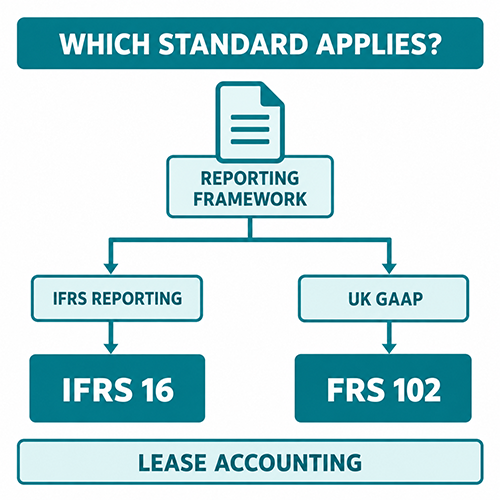
Compare IFRS 16 and FRS 102 lease accounting, including their scope, pre-2026 differences, the 2026 changes and the practical differences that remain.
Article / update
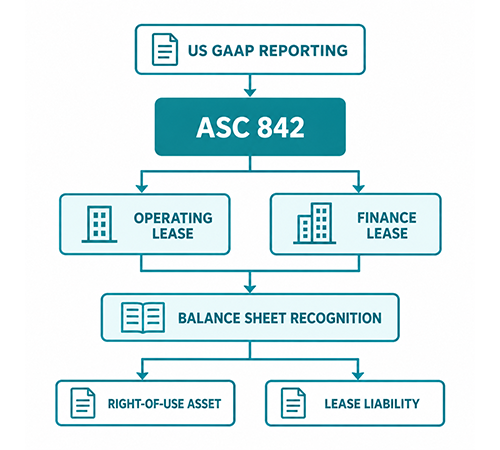
Understand ASC 842 lease accounting, including classification, measurement, exemptions and the key differences from IFRS 16 and revised FRS 102.
Article / update
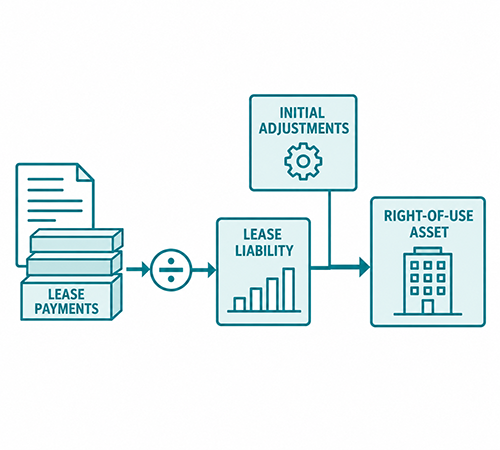
Explore the calculation of lease liabilities and right-of-use assets under IFRS 16 and FRS 102, from present value and discount rates to depreciation.
Article / update
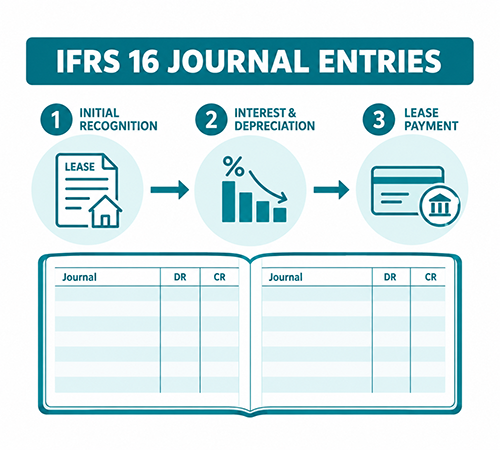
A detailed guide to IFRS 16 journal entries, covering lease recognition, interest, liability repayments, depreciation and the transition to FRS 102 in 2026.

