Case Study
North London Waste Authority: A Local Authority Fixed Asset Accounting Case Study
Written by: John de Robeck • Published: January 14, 2025 • Updated: September 22, 2026
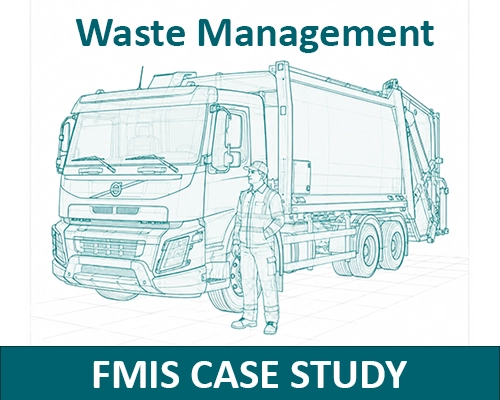

This case study explains how North London Waste Authority and FMIS developed a cloud-based fixed asset accounting environment around evolving classifications, financial periods and reporting requirements. It is intended for local authority finance and asset teams considering how data design, configurable software and implementation support can strengthen financial control, reporting and audit readiness.



Challenges



Client Overview: North London Waste Authority is a statutory public authority serving more than two million residents across seven north London boroughs. Its responsibilities include arranging waste disposal and managing waste from the area’s reuse and recycling centres.
North London Waste Authority (NLWA) selected FMIS Fixed Assets to establish a cloud-based fixed asset accounting system capable of supporting detailed financial records, configurable asset classifications and changing reporting requirements.
The project required more than a standard software setup. As NLWA’s source data and Finance Team requirements developed, FMIS worked alongside the organisation to refine the asset structure, support successive imports and provide practical guidance on configuration, reporting and day-to-day use. This local authority fixed asset accounting case study shows how configurable software and collaborative implementation can support an evolving public-sector programme.
NLWA’s project involved bringing together asset information from multiple sources while its preferred data structure was still developing. Categories, subcategories, locations, facilities, asset systems and other classifications all needed to be represented consistently.
The system had to retain useful identifiers from source records and provide a clear basis for importing and maintaining asset data. It also needed to support individual asset records and wider views by location, facility and asset grouping.
Financial requirements included monthly accounting periods, year-end processing and different approaches to depreciation. NLWA also needed to manage impairments, revaluations, transfers and disposals. As the Finance Team refined its requirements, the implementation needed to accommodate configuration changes without losing control of the accounting structure.
Local authorities prepare their financial statements under the Accounts and Audit Regulations 2015 and proper accounting practices set out in the CIPFA/LASAAC Code of Practice on Local Authority Accounting. The Code is based on International Financial Reporting Standards, adapted to reflect the public-sector and statutory framework within which local authorities operate.
A local authority fixed asset register may include property, plant and equipment, infrastructure assets, heritage assets and investment properties. Operational land and buildings, specialist infrastructure and assets without an active market can require different approaches to classification and valuation. Finance teams must also maintain accurate information about useful lives, depreciation, impairments, revaluations, component replacements, transfers and disposals.
Regular reconciliation between the fixed asset register, capital expenditure records and the accounting system helps ensure that additions and subsequent changes are reflected in the annual accounts. This depends on consistent identifiers, clear classifications and a traceable history of changes. Incomplete or outdated source information can make both valuation and audit more difficult, which is why NLWA needed a system that could accommodate developing data without losing financial control.

FMIS began by working with NLWA to understand its accounting calendar, asset classifications, depreciation policies, reporting requirements and source data. These discussions formed the basis of a detailed setup document and the initial system configuration.
The configuration was refined as NLWA received further data and involved additional stakeholders. When new subcategories and revised analysis codes were required, FMIS consultants explained the relationship between the main asset profile, accounting defaults, numbering structures and imported records.
FMIS Fixed Assets uses configurable profiles and analysis codes to describe assets according to an organisation’s own requirements. For NLWA, these included category, subcategory, location, facility, asset type, asset system, status and functional location.
This structure supports different views of the fixed asset register while maintaining a consistent accounting record. Saved layouts can present the fields most useful to the Finance Team and retain preferred sorting. Main asset and sub-asset records can also provide detailed and consolidated views of related components within a facility.
Data preparation and import were central to the project. FMIS supported NLWA with import templates, validation and the process for removing and reloading test data when the asset structure changed.
The system was configured around NLWA’s financial year, accounting periods and required depreciation methods. It also provides controlled processes for additions, transfers, disposals, impairments and revaluations, giving NLWA a defined route for maintaining information as its data develops.
Some asset information depended on external data and decisions involving different project stakeholders. FMIS continued to provide workshops, demonstrations and direct support while these dependencies were resolved.
When NLWA revised its classification requirements, FMIS set out the appropriate sequence for changing profiles, exporting existing codes, updating defaults and reimporting revised data. Support also covered layouts, facility groupings, batch processes and presenting useful fields to Finance Team users.
NLWA now has a configured cloud-based fixed asset accounting environment designed around its financial periods, asset classifications and reporting requirements.
At its latest review, NLWA confirmed that it had identified approximately 11,000 assets as part of the programme. The authority highlighted improved data quality and consistency, together with stronger financial control, compliance and audit readiness, as the clearest benefits achieved to date.
Confirmed outcomes include:
The benefits confirmed so far relate principally to data quality, register structure and financial control. NLWA has not yet formally measured staff-time savings, reductions in separate manual records or an annual financial benefit.
FMIS has continued to support the programme through testing, revised imports, system demonstrations and detailed configuration advice as NLWA’s source data and Finance Team requirements have developed.
NLWA’s experience provides several practical lessons for other public authorities planning a fixed asset software implementation:
What is the purpose of a local authority fixed asset register?
It provides a structured record of the authority’s non-current assets and the financial information associated with them. It supports depreciation, valuation changes, disposals, financial reporting and the evidence required for review and audit.
Why is asset classification important?
Different asset classes may require different accounting treatments, useful lives, depreciation methods and reporting. Consistent categories and subcategories also help finance teams analyse assets by location, facility, function or asset type.
How can fixed asset accounting software support local authority controls?
A dedicated system can apply consistent accounting profiles, maintain an audit trail and provide controlled processes for additions, imports and asset lifecycle changes. Configurable layouts and reports can then help users review the register and reconcile it with wider financial records.
What outcomes has NLWA reported from using FMIS?
At its latest review, NLWA confirmed that approximately 11,000 assets had been identified as part of the programme. It also reported clearer data quality and consistency, stronger financial control, compliance and audit readiness, and useful flexibility to organise assets by system or building as its requirements developed.
This public sector fixed asset accounting case study demonstrates the value of combining configurable software with an implementation approach that can respond to changing information and stakeholder requirements.
FMIS Fixed Assets provides NLWA with a structured fixed asset management platform for financial processing and reporting, supported by continuing consultancy as its asset data is classified, presented and maintained.
For local government and other UK public sector organisations, a reliable fixed asset register is an important foundation for public sector accounting and balance sheet reporting. It records capital assets and other non-current assets in the UK public sector, supports the annual depreciation charge and provides an audit trail for capital expenditure, impairment and valuation changes.
FMIS provides fixed asset accounting software and implementation support for local authorities, central government organisations and other public bodies.
Learn more about FMIS solutions for local and central government, or request a product demonstration to discuss your requirements.
 https://www.fmis.co.uk/wp-content/uploads/2026/08/Asset-Depreciation-Methods-.webp
450
500
John de Robeck
https://www.fmis.co.uk/wp-content/uploads/2026/04/FMISNavyTeal-1-150x80-1.webp
John de Robeck2026-08-27 12:51:012026-09-22 08:30:14Asset Depreciation Methods Explained for UK Businesses
https://www.fmis.co.uk/wp-content/uploads/2026/08/Asset-Depreciation-Methods-.webp
450
500
John de Robeck
https://www.fmis.co.uk/wp-content/uploads/2026/04/FMISNavyTeal-1-150x80-1.webp
John de Robeck2026-08-27 12:51:012026-09-22 08:30:14Asset Depreciation Methods Explained for UK Businesses https://www.fmis.co.uk/wp-content/uploads/2026/08/GCA-Supplier-logo-G-cloud-15-500px.webp
400
495
John de Robeck
https://www.fmis.co.uk/wp-content/uploads/2026/04/FMISNavyTeal-1-150x80-1.webp
John de Robeck2026-08-12 16:28:312026-09-29 11:21:59FMIS awarded G-Cloud 15 supplier status
https://www.fmis.co.uk/wp-content/uploads/2026/08/GCA-Supplier-logo-G-cloud-15-500px.webp
400
495
John de Robeck
https://www.fmis.co.uk/wp-content/uploads/2026/04/FMISNavyTeal-1-150x80-1.webp
John de Robeck2026-08-12 16:28:312026-09-29 11:21:59FMIS awarded G-Cloud 15 supplier status https://www.fmis.co.uk/wp-content/uploads/2026/03/UK-public-sector-indexation.webp
400
495
John de Robeck
https://www.fmis.co.uk/wp-content/uploads/2026/04/FMISNavyTeal-1-150x80-1.webp
John de Robeck2026-04-15 11:59:412026-04-15 11:59:44Indexation in UK Public Sector Fixed Asset Accounting
https://www.fmis.co.uk/wp-content/uploads/2026/03/UK-public-sector-indexation.webp
400
495
John de Robeck
https://www.fmis.co.uk/wp-content/uploads/2026/04/FMISNavyTeal-1-150x80-1.webp
John de Robeck2026-04-15 11:59:412026-04-15 11:59:44Indexation in UK Public Sector Fixed Asset Accounting https://www.fmis.co.uk/wp-content/uploads/2026/03/Non-Current-Assets-vs-Fixed-Assets.webp
400
495
Vicky Stanley
https://www.fmis.co.uk/wp-content/uploads/2026/04/FMISNavyTeal-1-150x80-1.webp
Vicky Stanley2026-03-20 15:49:272026-03-20 15:54:11Why the UK Public Sector Is Moving from Fixed Assets to Non Current Assets
https://www.fmis.co.uk/wp-content/uploads/2026/03/Non-Current-Assets-vs-Fixed-Assets.webp
400
495
Vicky Stanley
https://www.fmis.co.uk/wp-content/uploads/2026/04/FMISNavyTeal-1-150x80-1.webp
Vicky Stanley2026-03-20 15:49:272026-03-20 15:54:11Why the UK Public Sector Is Moving from Fixed Assets to Non Current Assets

 Protected: FMIS Internal Training – Recap and Quiz