FMIS Software
  • Home
  • Solutions
    • Fixed Asset Management Systems
      • Capital Projects
      • Enterprise Asset Management
      • Fixed Asset Management Software
    • Asset Tracking
      • Barcode Tracking
      • FMIS Mobile Asset Manager
    • Purchase to Pay
      • Purchase Order Processing
      • Sales Order Processing
    • Stock and Inventory
      • Kitting and Assembly
      • Material Requirements Planning (MRP)
      • Production Control
    • Equipment Maintenance
      • Field Service Management
    • Lease Accounting
      • Order Management
  • Market Sectors
    • Commercial and Retail
    • Education
    • Government
    • Health
    • Manufacturing
    • Non-Profit
    • Oil, Gas and Energy
  • Partners
    • Deltek
    • Find a partner
    • Become a Partner
  • Resources
    • Trust Centre
    • News and articles
    • Case studies
    • Fixed asset management guide
  • About us
  • Contact
    • Request a demo
    • Pricing
    • Product information
    • Customer Support
    • Careers
    • Training Feedback
  • Click to open the search input field Click to open the search input field Search
  • Menu Menu
You are here: Home1 / News2 / Why Physical Verification of Fixed Assets is Necessary

Why Physical verification of fixed assets is necessary

Discover the importance of physical verification in fixed asset management. Ensure accurate records, prevent losses, and enhance financial reporting.

Written by: John de Robeck • Published: July 26, 2023 • Updated: April 10, 2026

Physical Asset Audits
  • Physical Verification Explained
  • Challenges and Solutions
  • Conclusion

For any organisation with material fixed asset balances, there is one question auditors will ask: can you prove these assets exist?

Physical verification is how finance teams answer that question. In practice, it means confirming that the assets recorded in the fixed asset register actually exist, are in the locations stated, and are in the condition assumed by the depreciation policy. Done well, it protects the integrity of the balance sheet, shortens the external audit and reduces the risk of material misstatement. If neglected, the register drifts away from reality, and the cost of correcting it grows with every reporting period that passes.

This guide explains why physical verification should be treated as a finance-owned control rather than an operational exercise, how it connects to audit outcomes and regulatory compliance, and how specialist software makes the process faster and more reliable.

What Physical Verification Actually Means

Physical verification is a direct, hands-on check of the assets an organisation holds. For finance teams, this means visiting the locations where assets are recorded, confirming they are present, matching them to the register by identifier (asset tag, serial number or barcode), and noting their condition.

This is distinct from the day-to-day tracking that operations or facilities teams do. Operational tracking tells you where an asset is. Physical verification tells you whether the register is right. The two are related but the purpose is different. Verification exists to serve the accounting records, not the operational workflow.

A typical verification exercise typically compares assets above the capitalisation threshold (or a defined sample where a rolling programme is used) in the fixed asset register against what can be physically observed. Any asset in the register that cannot be found is a potential ghost asset. Any asset found on site that is not in the register is either uncapitalised or miscoded. Both are problems that affect the accuracy of the balance sheet.

Why Finance Must Own Verification

In many organisations, physical verification is delegated to facilities, IT or operations teams. This creates a structural weakness: the people running the count are not the people accountable for the financial outputs.

Finance should own the verification process because finance owns the register, the depreciation policy and the reconciliation to the general ledger. If a discrepancy is found during verification, it is finance that must decide whether to write off a ghost asset, recognise an impairment, or reclassify a misrecorded item. These are accounting decisions, not operational ones.

That does not mean finance staff need to physically walk every site. It means finance defines the scope, sets the methodology, reviews the results and signs off the reconciliation. Operations, facilities or external teams can carry out the fieldwork, but the governance structure must keep finance in control.

This ownership model also makes it easier to demonstrate to auditors that the verification was independent of the teams responsible for the assets being counted.

The Audit Case for Physical Verification

External auditors are required to obtain sufficient appropriate audit evidence for material balance sheet items. Fixed assets are almost always material. If the auditor cannot satisfy themselves that the recorded assets exist, they may need to extend testing, which can increase time and cost, and in more serious cases may impact the audit opinion.

A well-run verification programme gives the auditor what they need up front:

  • Evidence of existence: the register has been tested against the physical asset base within the reporting period.
  • Evidence of condition: assets that are damaged, idle or obsolete have been identified and assessed for impairment.
  • Evidence of completeness: assets found on site but missing from the register have been investigated and, where appropriate, recognised and capitalised in line with accounting policy.
  • Evidence of controls: the verification was planned, scoped, executed by staff independent of the asset custodians, and reconciled with documented sign-off.

Organisations that present this evidence before the audit fieldwork begins typically experience shorter audits, fewer queries, and lower fees. Those that cannot present it should expect the opposite.

Ghost Assets and the Balance Sheet

A ghost asset is an asset that appears in the register but no longer exists physically. It may have been disposed of without the disposal being recorded. It may have been scrapped, stolen or transferred to another site. Whatever the reason, it continues to carry a net book value on the balance sheet and may still be generating depreciation charges.

The financial impact is direct. Overstated fixed asset balances inflate total assets and distort ratios that lenders, investors and analysts rely on. Depreciation charged on ghost assets overstates operating costs and understates operating profit by the same amount. Capital allowance claims based on assets no longer in use create tax compliance risk.

Physical verification is the most reliable way to detect ghost assets. Without it, there is no systematic way to confirm that the assets in the register are still in use.

Regulatory and Compliance Context

While UK legislation does not prescribe a specific verification frequency, the obligations around fixed asset accuracy make verification a practical necessity.

The Companies Act 2006 requires companies to keep accounting records that show and explain the company’s transactions and disclose the financial position with reasonable accuracy. An untested fixed asset register does not meet this standard for any organisation with a material asset base.

HMRC expects records that support capital allowance claims. If an asset has been disposed of but still appears in the register, capital allowance claims may be misstated. Verification catches this before HMRC does.

For public sector bodies, the requirements are more explicit. The CIPFA Code of Practice and the Government Financial Reporting Manual (FReM) both expect asset registers to be verified. NHS organisations operating under the Department of Health and Social Care’s Group Accounting Manual face similar expectations. Charities reporting under the Charities SORP must disclose tangible fixed assets by category, and the data behind those disclosures needs to be tested.

In regulated industries or organisations subject to Sarbanes-Oxley (SOX) requirements, physical verification is commonly implemented as part of internal control frameworks.

How to Structure a Verification Programme

The approach depends on the size and complexity of the asset base. The two common models are full annual counts and rolling programmes.

Full annual count

Every asset above the capitalisation threshold is verified in a single exercise, typically ahead of the year-end close. This provides complete coverage in one period but requires significant resources and can disrupt operations if not planned carefully.

Rolling programme

A proportion of assets are verified each quarter or each month, with the full register covered over a defined cycle (commonly one to three years). High-value or high-risk asset classes are verified more frequently. This spreads the workload and reduces operational disruption, but requires a clear schedule and tracking mechanism to ensure full coverage is achieved within the cycle.

Whichever model is used, the programme should include:

  • Defined scope: which asset classes, locations and entities are included in each count.
  • Independence: the counting team should not be the same people who are responsible for the assets being counted.
  • Documented methodology: how assets are identified, how condition is assessed, and how discrepancies are recorded.
  • Reconciliation and sign-off: variances between the count and the register should be investigated, resolved and formally signed off by finance before the trial balance is finalised.
  • Audit trail: the full record of the verification, including scope, results, exceptions and resolutions, should be retained as evidence for auditors.

How Technology Reduces the Cost and Improves the Quality

Manual verification using printed spreadsheets and handwritten notes can be slow and difficult to audit at scale. Modern asset tracking software with barcode or RFID capability changes the economics of verification significantly.

With barcode scanning, the verification team scans each asset tag and the system instantly matches it to the register. Assets that are present are confirmed in seconds. Assets in the register that are not scanned are flagged automatically as exceptions. This eliminates the manual matching process that is the main source of errors and delay in traditional counts.

The benefits are practical:

  • A count that takes days with clipboards and spreadsheets can be completed in hours with handheld scanners.
  • Results feed directly into the fixed asset accounting system, removing the need for manual data entry and reconciliation.
  • The audit trail is generated automatically, with timestamps, user identities and location data recorded for every scan.
  • Exception reports are available immediately, so finance can begin investigating variances on the same day.

Mobile asset tracking extends this further by allowing verification to happen on phones or tablets, which is particularly useful for organisations with distributed sites or field-based assets.

Connecting Verification to the Period-End Close

Physical verification is most valuable when it feeds directly into the close process. If the count is done but the results sit in a spreadsheet that nobody reconciles until the auditors ask for it, most of the value is lost.

In a well-governed process, verification results are reconciled to the register before the depreciation runs for the relevant period. Ghost assets are written off. Impairments are recognised. Location corrections are posted. By the time the trial balance is prepared, the fixed asset balances reflect what actually exists, not what the register assumed.

This approach shortens the close, reduces audit queries and gives the CFO confidence that the fixed asset lines in the financial statements are supportable.

Summary

Physical verification is not an inventory exercise. It is a financial control that protects the balance sheet, supports the external audit and reduces compliance risk. Finance should own it because finance is accountable for the outputs: accurate depreciation, correct net book values, and supportable capital allowance claims.

Organisations that verify regularly, with a clear methodology and proper reconciliation, find their audits are shorter, their close is faster and their fixed asset data is reliable. Those that treat verification as an occasional operational task tend to discover problems only when auditors or regulators find them first.

Specialist software from FMIS brings the verification process, the register and the general ledger into a single system, so that verification, reconciliation and posting can be managed within a single, connected workflow.

The Concept of Physical Verification

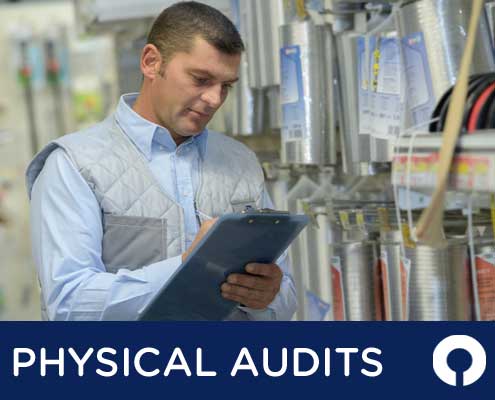
So, what exactly is physical verification? Physical verification is an essential part of effective fixed asset management. It involves physically inspecting and verifying the existence, condition, and ownership of assets. Unlike other asset management methods, such as barcode tracking or asset registers, which rely on technology and documentation, physical verification provides tangible evidence of assets’ presence and accuracy.

Distinguishing Physical Verification from Other Methods

Physical verification differs from other asset management methods in its direct and hands-on approach. While asset tracking systems and asset registers provide valuable information about assets, physical verification adds an extra layer of certainty by physically inspecting and verifying the assets’ existence. It complements these other methods by confirming the accuracy of the recorded data and providing evidence to support it.

Importance of Physical Verification

Ensuring Asset Existence and Accuracy

One of the key and most obvious reasons physical verification is necessary is to confirm the existence of assets. By physically inspecting assets, organisations can identify any missing or misplaced items, thereby improving the accuracy of asset records. This information is vital for making informed decisions regarding maintenance, depreciation rates, and resource allocation.

Detecting and Preventing Asset Misappropriation

Physical asset verification acts as a deterrent for asset misappropriation and reduces the risk of financial losses and fraud. By conducting regular physical verification exercises, organisations can identify any discrepancies between the recorded assets and the ones physically present. This process helps detect and prevent unauthorised disposal or misuse of assets, enhancing internal controls and safeguarding against potential losses.

Compliance with Regulatory Requirements

Physical verification is crucial for organisations to meet regulatory requirements and maintain accurate financial reporting. Various legal and statutory requirements mandate organisations to perform regular physical verification of fixed assets. Failure to comply with these regulations can result in penalties, legal consequences, and damage to the company’s reputation. By conducting physical verification in accordance with the prescribed guidelines, organisations demonstrate their commitment to compliance and integrity.

Process of Physical Verification

Preparing for Physical Verification

Before initiating physical verification, proper planning and preparation are essential. This includes identifying the assets to be verified, assembling a competent team, and notifying relevant departments. Adequate resources, such as personnel, tools, and equipment, must be allocated to ensure a smooth and efficient verification process.

Conducting Physical Counts and Inspections

The core of physical verification involves physically counting and inspecting assets. This process may involve visiting different locations, identifying assets using serial numbers or other identifiers, and verifying their physical condition. The team should document any discrepancies or observations during the inspection to aid in the subsequent reconciliation process.

Documenting and Reconciling Results

After completing the physical counts and inspections, the team must document the results accurately. This includes updating the fixed asset register or asset tracking system with the verified data and reconciling any discrepancies between the physical counts and the recorded data. The documentation should be comprehensive, detailing any asset additions, disposals, or changes in condition.

How Often Should Verification of Fixed Assets Be Performed?

The frequency of physical verification depends on various factors, including the size of the company, the nature of its operations, and regulatory requirements. Generally, it is recommended to perform physical verification on a regular basis to ensure accurate asset records and effective asset management.

For smaller organisations with fewer assets, an annual or biennial physical verification may be sufficient. This allows for a comprehensive review of assets and helps identify any discrepancies or missing items.

In larger organisations with a higher volume of assets or in industries where asset turnover is frequent, more frequent physical verification may be necessary. Quarterly or semi-annual verifications can help maintain tighter control over assets and quickly identify any potential issues.

Challenges and Solutions in Physical Verification

Common Challenges Faced

During the physical verification process, organisations may encounter various challenges. These can include logistical difficulties in reaching remote locations, inaccurate or outdated asset records, or inadequate coordination between different departments. It is crucial to anticipate these challenges and develop strategies to overcome them effectively.

Best Practices and Strategies

To overcome the challenges faced during physical verification, organisations can adopt several best practices. These include conducting regular audits of asset data, improving communication and coordination among finance and admin teams, and leveraging technology to streamline the verification process. Implementing standardised procedures, providing training to personnel involved, and seeking professional assistance can also contribute to successful physical verification exercises.

Utilising Technology for Efficient Verification

Technology plays a vital role in optimising the physical verification process. Asset tracking systems and fixed asset management software can simplify asset identification, streamline data entry, and automate reconciliation. By integrating physical verification with these systems, organisations can achieve greater accuracy, efficiency, and consistency in managing fixed assets.

Integration of Physical Verification in Fixed Asset Management

Linking Physical Fixed Asset Verification with Asset Tracking Systems

To enhance the effectiveness of physical verification, organisations can link it with asset tracking systems. By scanning asset tags or barcodes during the physical verification process, the data can be automatically updated in the asset tracking system. This integration ensures real-time accuracy and reduces the risk of errors associated with manual data entry.

Incorporating Physical Verification into Asset Lifecycle Management

Integrating physical verification into asset lifecycle management processes is essential for maintaining accurate asset data throughout an asset’s lifespan. By conducting regular physical verification at specific stages, such as acquisition, disposal, or major maintenance events, organisations can validate the asset’s condition and update its relevant data, including depreciation rates and accumulated depreciation.

Ensuring Data Accuracy and Consistency

By incorporating physical verification into fixed asset management practices, organisations can ensure the accuracy and consistency of asset data. This integration helps bridge the gap between recorded data and the physical existence of assets, enabling organisations to make informed decisions based on reliable information. It also enhances financial reporting, reduces the risk of errors, and promotes efficient resource management.

Conclusion

Physical verification of fixed assets is a necessary and vital process for effective fixed asset management. It ensures the accuracy and existence of assets, helps prevent asset misappropriation, and ensures compliance with regulatory requirements. By following best practices, overcoming challenges, and leveraging technology, organisations can conduct physical verification efficiently and integrate it seamlessly into their fixed asset management systems. Implementing regular physical verification practices brings tremendous results in terms of enhanced asset control, reduced risks, improved financial reporting accuracy, and ultimately contributes to overall organisational success.

Looking to incorporate powerful asset management software into your physical asset verification? Here at FMIS we’ve developed an industry-leading asset management system that can help you accurately track assets, automate depreciation calculations and reporting, schedule maintenance, and much, much more.

To find out more, contact us or book a demo of our software to take your management and verification of fixed assets to the next level.

Try FMIS software today

For more information on how FMIS can help you effectively track and manage your assets and equipment, please get in touch with an FMIS consultant or call us on +44 (0) 1227 773003.

SoftwareSuggest Award

SoftwareSuggest Awards – FMIS recognised for easy implementation

March 26, 2024
FMIS recognised for Easy Implementation in the SoftwareSuggest 2024 awards
https://www.fmis.co.uk/wp-content/uploads/2024/03/SoftwareSuggest-Awards-2024-495x400-1.webp 400 495 John de Robeck https://www.fmis.co.uk/wp-content/uploads/2026/04/FMISNavyTeal-1-150x80-1.webp John de Robeck2024-03-26 10:29:322026-03-10 10:57:34SoftwareSuggest Awards – FMIS recognised for easy implementation
Asset Valuation Methods

Asset Valuation Methods

October 26, 2023
A comprehensive guide to Asset Valuation covering the four main methods, when to use them and the strengths and weakness of each
https://www.fmis.co.uk/wp-content/uploads/2023/10/Asset-Valuation-Methods-495x400-1.jpg 400 495 John de Robeck https://www.fmis.co.uk/wp-content/uploads/2026/04/FMISNavyTeal-1-150x80-1.webp John de Robeck2023-10-26 13:16:202026-07-01 10:14:59Asset Valuation Methods
NHS SBS Partner

FMIS announces new NHS partnership

December 18, 2019
FMIS announces new partnership with NHS Shared Business Services to supply FMIS Fixed Assets and IFRS 16 Leasing software to their clients.
https://www.fmis.co.uk/wp-content/uploads/2019/06/Feature-image-495x400.jpg 400 495 John de Robeck https://www.fmis.co.uk/wp-content/uploads/2026/04/FMISNavyTeal-1-150x80-1.webp John de Robeck2019-12-18 11:23:412026-03-10 11:09:42FMIS announces new NHS partnership
FMIS sponsors Govmoney 2019

FMIS to sponsor GovMoney 2019

December 2, 2019
FMIS to sponsor GovMoney2019 conference for public sector finance professionals.
https://www.fmis.co.uk/wp-content/uploads/2019/11/Govmoney2019-495x400.jpg 400 495 John de Robeck https://www.fmis.co.uk/wp-content/uploads/2026/04/FMISNavyTeal-1-150x80-1.webp John de Robeck2019-12-02 17:25:102026-03-10 11:09:51FMIS to sponsor GovMoney 2019
When to outsource your fixed asset inventory

When to outsource your fixed assets inventory

July 12, 2019
Fixed Asset management software V11 update

Fixed Assets v11 release

May 14, 2014
Fixed Assets Add-on module or specialist software

Fixed Assets Add-on module or Specialist software

May 26, 2016
What are the different types of fixed assets in accounting?

What are the different types of fixed assets in accounting?

April 5, 2022
Share this entry
  • Share on Facebook
  • Share on X
  • Share on WhatsApp
  • Share on Pinterest
  • Share on LinkedIn
  • Share on Tumblr
  • Share on Reddit
  • Share by Mail
Support Icon
Can we help?
Book a demo View products Contact support
Or call: +44 (0) 1227 773003
Mon–Fri, 9:00–17:00 (BST/GMT)

Explore More

  • FMIS awarded G-Cloud 15 supplier status
  • Indexation in UK Public Sector Fixed Asset Accounting
  • Why the UK Public Sector Is Moving from Fixed Assets to Non Current Assets
  • Preparing for Charities SORP Lease Accounting Changes 2026
  • FRS 102 lease accounting changes 2026: what UK organisations need to know

SOLUTIONS

  • Fixed Asset Management Systems
  • Asset Tracking
  • Purchase to Pay
  • Order Management
  • Equipment Maintenance
  • Lease Accounting
  • Stock and Inventory
  • View all solutions

Home › Why Physical Verification of Fixed Assets is Necessary

Market Sectors

  • Commercial and Retail
  • Education
  • Local and Central Government
  • NHS and Health
  • Manufacturing
  • Non-profit
  • Oil, Gas and Energy

FOLLOW US

FMIS Twitter FMIS Linkedin

CONTACT US

FMIS Ltd
167b John Wilson Business Park
Whitstable
Kent
CT5 3RA
United Kingdom

Phone:+44 (0) 1227 773003
Fax:+44 (0) 1227 773005
Sales:sales@fmis.co.uk
Support:support@fmis.co.uk

Copyright © 2024 - All rights reserved www.fmis.co.uk
  • Privacy Policy
  • Cookie Policy
Link to: N-SEA Enhances Offshore Equipment Management with FMIS Link to: N-SEA Enhances Offshore Equipment Management with FMIS N-SEA Enhances Offshore Equipment Management with FMISN-Sea Case Study Link to: Asset Management Compliance: How Asset Management Software Can Help Link to: Asset Management Compliance: How Asset Management Software Can Help Asset Management ComplianceAsset Management Compliance: How Asset Management Software Can Help
Scroll to top
We use cookies on our website to give you the most relevant experience by remembering your preferences and repeat visits. By clicking “Accept All”, you consent to the use of ALL the cookies. However, you may visit "Cookie Settings" to provide a controlled consent.
Cookie SettingsAccept All
Manage consent

Privacy Overview

This website uses cookies to improve your experience while you navigate through the website. Out of these, the cookies that are categorized as necessary are stored on your browser as they are essential for the working of basic functionalities of the website. We also use third-party cookies that help us analyze and understand how you use this website. These cookies will be stored in your browser only with your consent. You also have the option to opt-out of these cookies. But opting out of some of these cookies may affect your browsing experience.
Necessary
Always Enabled
Necessary cookies are absolutely essential for the website to function properly. These cookies ensure basic functionalities and security features of the website, anonymously.
CookieDurationDescription
cookielawinfo-checkbox-advertisement1 yearSet by the GDPR Cookie Consent plugin, this cookie is used to record the user consent for the cookies in the "Advertisement" category .
cookielawinfo-checkbox-analytics11 monthsThis cookie is set by GDPR Cookie Consent plugin. The cookie is used to store the user consent for the cookies in the category "Analytics".
cookielawinfo-checkbox-functional11 monthsThe cookie is set by GDPR cookie consent to record the user consent for the cookies in the category "Functional".
cookielawinfo-checkbox-necessary11 monthsThis cookie is set by GDPR Cookie Consent plugin. The cookies is used to store the user consent for the cookies in the category "Necessary".
cookielawinfo-checkbox-others11 monthsThis cookie is set by GDPR Cookie Consent plugin. The cookie is used to store the user consent for the cookies in the category "Other.
cookielawinfo-checkbox-performance11 monthsThis cookie is set by GDPR Cookie Consent plugin. The cookie is used to store the user consent for the cookies in the category "Performance".
CookieLawInfoConsent1 yearRecords the default button state of the corresponding category & the status of CCPA. It works only in coordination with the primary cookie.
PHPSESSIDsessionThis cookie is native to PHP applications. The cookie is used to store and identify a users' unique session ID for the purpose of managing user session on the website. The cookie is a session cookies and is deleted when all the browser windows are closed.
viewed_cookie_policy11 monthsThe cookie is set by the GDPR Cookie Consent plugin and is used to store whether or not user has consented to the use of cookies. It does not store any personal data.
Functional
Functional cookies help to perform certain functionalities like sharing the content of the website on social media platforms, collect feedbacks, and other third-party features.
Performance
Performance cookies are used to understand and analyze the key performance indexes of the website which helps in delivering a better user experience for the visitors.
Analytics
Analytical cookies are used to understand how visitors interact with the website. These cookies help provide information on metrics the number of visitors, bounce rate, traffic source, etc.
CookieDurationDescription
CONSENT2 yearsYouTube sets this cookie via embedded youtube-videos and registers anonymous statistical data.
_ga2 yearsThe _ga cookie, installed by Google Analytics, calculates visitor, session and campaign data and also keeps track of site usage for the site's analytics report. The cookie stores information anonymously and assigns a randomly generated number to recognize unique visitors.
_gat_UA-48954022-11 minuteA variation of the _gat cookie set by Google Analytics and Google Tag Manager to allow website owners to track visitor behaviour and measure site performance. The pattern element in the name contains the unique identity number of the account or website it relates to.
_gid1 dayInstalled by Google Analytics, _gid cookie stores information on how visitors use a website, while also creating an analytics report of the website's performance. Some of the data that are collected include the number of visitors, their source, and the pages they visit anonymously.
Advertisement
Advertisement cookies are used to provide visitors with relevant ads and marketing campaigns. These cookies track visitors across websites and collect information to provide customized ads.
CookieDurationDescription
VISITOR_INFO1_LIVE5 months 27 daysA cookie set by YouTube to measure bandwidth that determines whether the user gets the new or old player interface.
YSCsessionYSC cookie is set by Youtube and is used to track the views of embedded videos on Youtube pages.
yt-remote-connected-devicesneverYouTube sets this cookie to store the video preferences of the user using embedded YouTube video.
yt-remote-device-idneverYouTube sets this cookie to store the video preferences of the user using embedded YouTube video.
Others
Other uncategorized cookies are those that are being analyzed and have not been classified into a category as yet.
SAVE & ACCEPT
Powered by CookieYes Logo