What is a Fixed Asset Register?
Why is it important to use one, and how can you best organise and maintain it?
Written by: John de Robeck • Published: June 1, 2023 • Updated: March 10, 2026
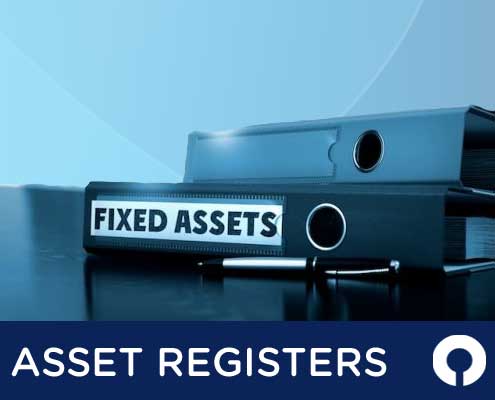

Making effective use of your organisation’s fixed assets is essential for meeting your business goals, but how can you create and manage accurate records of all your important fixed asset information? Enter the fixed asset register: your database of everything you need to know about your assets. But how exactly does an asset register work, what are the benefits of using one, and what are the challenges involved for businesses that want to better manage their assets? Here’s our full guide to asset registers.
Fixed assets are long-term assets that a business owns and uses to generate income. In contrast to current assets (short-term assets expected to be converted into cash within a year, such as inventory), fixed assets are expected to be used for more than a year as part of normal business operations.
Fixed assets can be divided into two main categories: tangible and intangible assets. Tangible fixed assets are physical assets such as property, plant, and equipment (PPE), furniture, computers, and vehicles. Intangible assets do not have a physical presence and include assets like IT software, copyrights, patents, and trademarks.
Both tangible and intangible fixed assets are included on a fixed asset register.
To put it simply, a fixed asset register is a database that contains detailed and comprehensive information about your fixed assets. The information that the asset register contains for each asset includes:
An asset register provides an overview of the value of a business’ assets, and therefore also indicates the value of the business as a whole. However, it can also have a range of other benefits.
With detailed and comprehensive information about each asset available in the asset register, businesses can more easily keep track of all their assets. Unique identification numbers, acquisition details, location tracking, and maintenance history are all included on the asset register, aiding asset tracking.
With all this information stored securely and accurately, businesses can reduce the risk of loss or theft of assets. Better monitoring of fixed assets therefore leads to reduced downtime or expenses linked to lost or stolen assets.
With accurate information about each asset’s acquisition date and age, maintenance history, depreciation schedule, and current condition, an asset register allows businesses to make informed decisions about maintenance. Choosing a maintenance method, devising a schedule, and making decisions about when to replace assets can keep costs down and reduce unplanned equipment downtime.
With a complete history and all important asset data stored in one place, asset registers simplify auditing and compliance with all relevant financial regulations such as IFRS and UK GAAP. Reporting fixed asset values, depreciation expenses, and impairments in financial statements becomes a breeze with a fixed asset register that offers easy and comprehensive information about all assets and accounting.
Instead of the end-of-month and year scramble to get all asset information up to date, a well-attended asset register means that all asset records are accurate and updated for quick and reliable compliance. This means that businesses do not have to worry about expensive financial penalties or legal repercussions accrued by failing to comply.
Implementing an asset register is not enough on its own; your business also needs to organise it in a way that makes sense to the organisation and makes it intuitive and effective to use. An asset register can quickly become complicated to use and interpret, especially if you use free spreadsheet templates to record all information manually, so these steps to ensure an organised asset register are essential.
When different people in various parts of the business name assets in different ways, confusion is inevitable. To maintain an organised and comprehensive register of fixed assets, it’s essential to standardise rules for naming assets. Fixed assets should be given easily identifiable and unique names that relate to the type, location, or even purpose of assets.
Although this seems like an obvious point, the accuracy of data in your fixed asset register could not be more important. Creating systems to ensure data accuracy is key to ensuring that the asset register’s information is valid and up-to-date. For example, your business may offer additional training for data entry employees and implement procedures to double-check and verify data accuracy. Even better, you may use specialised asset management and tracking software that can automate data entry for you with no risk of human error.
The asset register can only be a truly effective tool if it is regularly and accurately updated. Physical audits and register updates are crucial to make sure all asset information is up-to-date.
Despite the obvious benefits of using an asset register, maintaining the register involves some challenges.
Keeping track of asset movements, relocations, and transfers across your business’ multiple locations or sites can prove a challenge for maintaining your asset register. When you have assets that you need to track across multiple locations, it’s important that you use an effective asset tracking system that integrates with your register of fixed assets. For example, using barcode or RFID asset tracking can help keep tabs on the location of assets across multiple sites in real time, keeping your register updated and reducing the risk of loss or theft.
As fixed assets depreciate and change in value over time, it’s important that the asset register keeps up to date with the value of all assets. Without updated asset valuations, it’s impossible to make data-informed decisions about when to repair and maintain assets or when to write them off and replace them. To overcome this challenge, it’s important that businesses regularly assess the value of assets in line with all relevant accounting principles and guidelines.
Leading on from the previous point, accurately calculating depreciation for all assets is key for tax and financial reporting reasons. With various depreciation methods and calculations for each asset, it’s important that businesses ensure all asset financial information in the asset register is up to date and accurate.
The internet is full of templates for asset registers that you can download for free. Usually formatted as a spreadsheet with sections for asset number, description, location, and more, these templates offer a very basic solution to fixed asset management. For organisations with basic asset management needs (for example, if they have only a few assets in a single location), one of these templates may suffice. However, the usefulness of these templates is very limited for organisations with greater asset management needs. With limited customisation options, lack of advanced depreciation calculations or asset tracking integration, and a reliance on manual data entry, management of the asset register using spreadsheets can be inefficient and time-consuming.
For this reason, many organisations are instead turning to fixed asset management software.
While a fixed asset register is crucial for effective asset management, maintaining and optimising your asset register is no small task, especially if you do it manually using spreadsheet templates. This is where asset management software can help.
Fixed asset management software can help businesses maintain an accurate and up-to-date fixed asset register by automating data entry, streamlining asset tracking across multiple locations, and providing valuable insights for decision-making with custom reporting. Advanced fixed asset management software integrates with your asset tracking solutions such as barcode or RFID tagging as well as automating depreciation calculations and simplifying compliance.
Looking for fixed asset management software? FMIS can help. Our powerful software for fixed asset management offers a range of features to help you save time, boost accuracy, ensure compliance with all relevant accounting standards, and gain greater visibility over your fixed assets. Moreover, its ability to integrate with your current ERP or finance software makes FMIS fixed assets software a valuable addition to your business. With our customer support agreements, you can enjoy expert support and free software upgrades.
To find out more about how asset management software can help your business, book a demo or contact our expert team.
 https://www.fmis.co.uk/wp-content/uploads/2024/03/SoftwareSuggest-Awards-2024-495x400-1.webp
400
495
John de Robeck
https://www.fmis.co.uk/wp-content/uploads/2026/04/FMISNavyTeal-1-150x80-1.webp
John de Robeck2024-03-26 10:29:322026-03-10 10:57:34SoftwareSuggest Awards – FMIS recognised for easy implementation
https://www.fmis.co.uk/wp-content/uploads/2024/03/SoftwareSuggest-Awards-2024-495x400-1.webp
400
495
John de Robeck
https://www.fmis.co.uk/wp-content/uploads/2026/04/FMISNavyTeal-1-150x80-1.webp
John de Robeck2024-03-26 10:29:322026-03-10 10:57:34SoftwareSuggest Awards – FMIS recognised for easy implementation https://www.fmis.co.uk/wp-content/uploads/2023/10/Asset-Valuation-Methods-495x400-1.jpg
400
495
John de Robeck
https://www.fmis.co.uk/wp-content/uploads/2026/04/FMISNavyTeal-1-150x80-1.webp
John de Robeck2023-10-26 13:16:202026-07-01 10:14:59Asset Valuation Methods
https://www.fmis.co.uk/wp-content/uploads/2023/10/Asset-Valuation-Methods-495x400-1.jpg
400
495
John de Robeck
https://www.fmis.co.uk/wp-content/uploads/2026/04/FMISNavyTeal-1-150x80-1.webp
John de Robeck2023-10-26 13:16:202026-07-01 10:14:59Asset Valuation Methods https://www.fmis.co.uk/wp-content/uploads/2019/06/Feature-image-495x400.jpg
400
495
John de Robeck
https://www.fmis.co.uk/wp-content/uploads/2026/04/FMISNavyTeal-1-150x80-1.webp
John de Robeck2019-12-18 11:23:412026-03-10 11:09:42FMIS announces new NHS partnership
https://www.fmis.co.uk/wp-content/uploads/2019/06/Feature-image-495x400.jpg
400
495
John de Robeck
https://www.fmis.co.uk/wp-content/uploads/2026/04/FMISNavyTeal-1-150x80-1.webp
John de Robeck2019-12-18 11:23:412026-03-10 11:09:42FMIS announces new NHS partnership https://www.fmis.co.uk/wp-content/uploads/2019/11/Govmoney2019-495x400.jpg
400
495
John de Robeck
https://www.fmis.co.uk/wp-content/uploads/2026/04/FMISNavyTeal-1-150x80-1.webp
John de Robeck2019-12-02 17:25:102026-03-10 11:09:51FMIS to sponsor GovMoney 2019
https://www.fmis.co.uk/wp-content/uploads/2019/11/Govmoney2019-495x400.jpg
400
495
John de Robeck
https://www.fmis.co.uk/wp-content/uploads/2026/04/FMISNavyTeal-1-150x80-1.webp
John de Robeck2019-12-02 17:25:102026-03-10 11:09:51FMIS to sponsor GovMoney 2019


 The Difference Between Stocktaking and Stock Checking