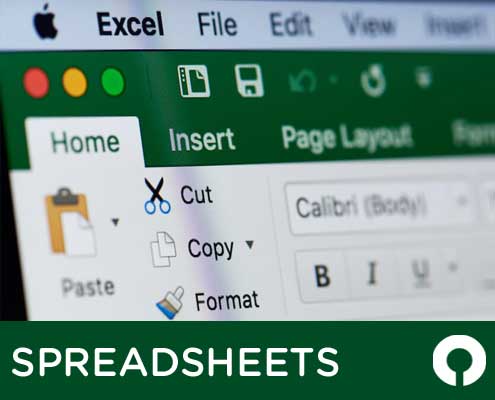
5 reasons to beware of the fixed asset spreadsheet
Asset management is an essential function of any organisation, whether it is a small business or a large enterprise. Proper asset management helps companies to maximise their resources, reduce costs, and increase efficiency. Traditionally, businesses have used spreadsheets to track and manage their assets, but this method can have serious limitations. In recent years, fixed asset software has emerged as a more sophisticated and efficient solution for asset management. In this article, we will discuss five key benefits of asset management software over spreadsheets.
Improved accuracy and completeness of data
One of the primary drawbacks of using spreadsheets for asset management is that they are prone to human error. Spreadsheets can be easily corrupted, duplicated, or overwritten, leading to inaccuracies in the data. Additionally, spreadsheets can be incomplete, as employees may forget to update them or may not have access to the latest version. This can lead to discrepancies in the asset records and make it difficult to get an accurate picture of the assets owned by the company.
In contrast, fixed asset software provides a centralised database that ensures data accuracy and completeness. Asset management software tracks all asset information, including purchase details, depreciation schedules, maintenance records, and disposal information, in a centralised database. This ensures that all data is up-to-date and accurate, reducing the risk of errors and making it easier to manage the assets effectively.
Streamlined asset tracking and management
Managing assets manually through spreadsheets can be time-consuming and error-prone. It can be challenging to keep track of asset location, depreciation schedules, maintenance records, and disposal information, among other things. This can lead to missed deadlines, unnecessary expenses, and other inefficiencies.
Fixed asset software provides an efficient and streamlined way to track and manage assets. Asset management software automates many of the asset management processes, including depreciation calculations, maintenance scheduling, and reporting. This reduces the amount of time and effort required to manage assets manually, freeing up employees to focus on other tasks.
Better compliance and audit readiness
Asset management is a critical function in ensuring compliance with accounting standards, tax regulations, and other legal requirements. Inaccurate or incomplete asset records can lead to compliance issues and may result in penalties or legal action.
Fixed asset software provides robust reporting capabilities that make it easier to comply with legal and regulatory requirements. Asset management software generates accurate and detailed reports on asset depreciation, maintenance history, and disposal, among other things. This makes it easier to prepare for audits and other compliance checks, ensuring that the company is always audit-ready.
Improved cost control and asset utilisation
Managing assets manually through spreadsheets can make it difficult to control costs and optimise asset utilisation. Without accurate and complete asset records, it can be challenging to identify underutilised assets, leading to unnecessary expenses.
Fixed asset software provides detailed insights into asset utilisation and can help companies identify underutilised assets. Asset management software can track asset usage patterns and provide insights into how assets are being used, making it easier to optimise asset utilisation and control costs.
Scalability and flexibility
As businesses grow, their asset management needs also become more complex. Managing assets manually through spreadsheets can become increasingly challenging as the number of assets and the size of the organisation grow.
Fixed asset software provides the scalability and flexibility needed to manage assets effectively as the business grows. Asset management software can be customised to meet the specific needs of the organisation and can handle a large volume of assets, making it easier to manage assets across different locations and departments.
Conclusion
Fixed asset software is a more sophisticated and efficient solution for asset management than spreadsheets. Asset management software provides improved accuracy and completeness of data, streamlined asset tracking and management, better compliance and audit readiness, improved cost control and asset utilisation, and scalability and flexibility. By investing in fixed asset software, companies can improve
For more information on choosing asset management software or FMIS’ range of products, please see our product pages or contact one of the team directly at sales@fmis.co.uk or on +44 (0) 1227 773003.

 https://www.fmis.co.uk/wp-content/uploads/2026/09/FMIS-Fixed-Assets-version-12.47-product-update.webp
396
495
John de Robeck
https://www.fmis.co.uk/wp-content/uploads/2026/04/FMISNavyTeal-1-150x80-1.webp
John de Robeck2026-09-17 15:15:282026-09-17 15:15:30What is new in FMIS Fixed Assets version 12.47
https://www.fmis.co.uk/wp-content/uploads/2026/09/FMIS-Fixed-Assets-version-12.47-product-update.webp
396
495
John de Robeck
https://www.fmis.co.uk/wp-content/uploads/2026/04/FMISNavyTeal-1-150x80-1.webp
John de Robeck2026-09-17 15:15:282026-09-17 15:15:30What is new in FMIS Fixed Assets version 12.47 https://www.fmis.co.uk/wp-content/uploads/2026/09/FMIS-Lease-Accounting-version-12.47-product-update.webp
396
495
John de Robeck
https://www.fmis.co.uk/wp-content/uploads/2026/04/FMISNavyTeal-1-150x80-1.webp
John de Robeck2026-09-17 15:14:582026-09-17 15:15:01What is new in FMIS Lease Accounting version 12.47
https://www.fmis.co.uk/wp-content/uploads/2026/09/FMIS-Lease-Accounting-version-12.47-product-update.webp
396
495
John de Robeck
https://www.fmis.co.uk/wp-content/uploads/2026/04/FMISNavyTeal-1-150x80-1.webp
John de Robeck2026-09-17 15:14:582026-09-17 15:15:01What is new in FMIS Lease Accounting version 12.47 https://www.fmis.co.uk/wp-content/uploads/2026/09/FMIS-AccountMate-Integration-for-FMIS-Fixed-Assets.webp
450
495
John de Robeck
https://www.fmis.co.uk/wp-content/uploads/2026/04/FMISNavyTeal-1-150x80-1.webp
John de Robeck2026-09-09 17:48:582026-09-21 18:12:04AccountMate Fixed Asset Integration with FMIS
https://www.fmis.co.uk/wp-content/uploads/2026/09/FMIS-AccountMate-Integration-for-FMIS-Fixed-Assets.webp
450
495
John de Robeck
https://www.fmis.co.uk/wp-content/uploads/2026/04/FMISNavyTeal-1-150x80-1.webp
John de Robeck2026-09-09 17:48:582026-09-21 18:12:04AccountMate Fixed Asset Integration with FMIS https://www.fmis.co.uk/wp-content/uploads/2026/08/Asset-Depreciation-Methods-.webp
450
500
John de Robeck
https://www.fmis.co.uk/wp-content/uploads/2026/04/FMISNavyTeal-1-150x80-1.webp
John de Robeck2026-08-27 12:51:012026-10-06 03:56:59Asset Depreciation Methods Explained for UK Businesses
https://www.fmis.co.uk/wp-content/uploads/2026/08/Asset-Depreciation-Methods-.webp
450
500
John de Robeck
https://www.fmis.co.uk/wp-content/uploads/2026/04/FMISNavyTeal-1-150x80-1.webp
John de Robeck2026-08-27 12:51:012026-10-06 03:56:59Asset Depreciation Methods Explained for UK Businesses




 The AA uses FMIS Leasing software