Best Practices in Fixed Asset Management
Discover the key strategies to optimize your asset lifecycle and cut costs.
Written by: John de Robeck • Published: March 18, 2024 • Updated: July 1, 2026
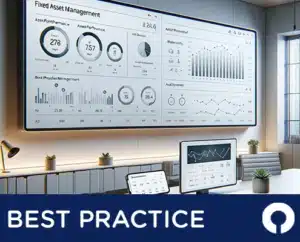

Fixed asset management is critical to company financial reporting and planning, and for many, it is also key to optimising asset utilisation. This article outlines best practices and helpful tips for saving you time, reducing costs and improving accuracy when managing fixed assets.
Managing fixed assets requires more than updating your asset register at the period end as an administrative box-ticking exercise. It is essential for accountants, facilities managers, and asset managers. It will help track asset life cycles, reduce costs, and maintain safety and compliance if done effectively. With solutions like FMIS Fixed Assets, managing the intricacies of fixed assets becomes streamlined, ensuring businesses can get the most out of their investments.
Let’s clarify what we mean by Fixed Asset Management, as it is often used interchangeably with similar asset management terms. Fixed Asset Management involves comprehensively tracking and maintaining all company fixed assets and investments. It is distinct from:

Efficient fixed asset management relies heavily on effective planning. Implementing a successful fixed asset management solution will require planning to deliver a process that meets the needs of the whole business. One of the most common reasons asset management projects fail is through a lack of adoption across the entire organisation, and this will usually happen when the chosen system is not suitable for one or more users within the business. It will not always be possible to deliver a single solution to meet all needs, but it is important to plan how chosen solutions will fit into the overall approach to managing fixed assets.
A strategy encompassing all business areas ensures that assets are managed efficiently from the get-go, preventing the pitfalls of siloed decision-making. A comprehensive fixed asset management plan can create a harmonious balance between various business functions, improving operational efficiency and financial gains.
Starting with an accurate asset register is essential to effectively managing your fixed assets. The starting point of implementing any new system will be to import or build your asset register. If you are starting from scratch, then it might make sense to implement your system first and complete the audit using the tools provided. A good asset management system will have features to simplify completing an audit, such as making bulk changes and tagging your assets for easy identification later on.
Surprisingly, many businesses operate with inaccurate registers, leading to ghost assets and financial discrepancies. Ghost assets skew fixed asset reporting and can significantly impact asset deployment. An asset cannot be effectively utilised if it doesn’t exist or cannot be found.
An audit can seem daunting if you have many assets but few resources. In this case, outsourcing your initial audit to one of the many providers specialising in stock takes and asset inventories may be worth outsourcing. Pricing is usually based on the number of assets, locations, and details to be recorded.
It is worth checking the accreditations of providers as they will vary across different industries and countries. Key UK accreditations for stock check or asset inventory providers may include ISO 9001:2015, ISO 55001:2014, RICS, CIPFA, NPORS, IAM Membership, SAFE Contractor, and Constructionline, ensuring quality, safety, and professional standards.
Fixed asset tracking is more than just knowing what you have; it’s about understanding asset performance and value over time. Distinct from, yet vital to, fixed asset management, effective tracking ensures real-time data accuracy, feeding into financial assessments and operational readiness. The essentials of a formal fixed asset tracking system, including schedules, documentation, and technology use, all contribute to a more financially sound asset management approach.
One key challenge asset managers will face when tracking fixed assets is the tendency for the business to maintain multiple asset registers. This will lead to inconsistency in how different departments track assets, but perhaps more importantly, it will lead to fragmented data and data duplication. The lack of an authoritative data source will make it difficult or impossible to complete an accurate fixed asset reconciliation.
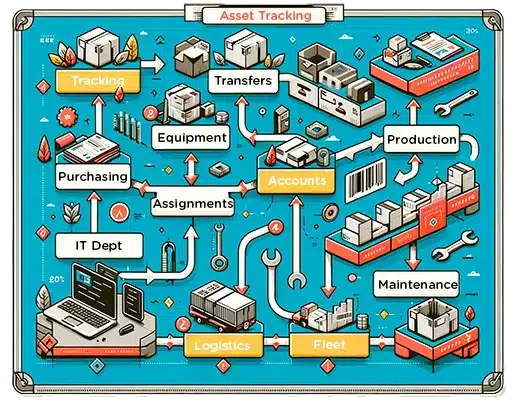
While fixed assets management and accounting fundamentals may have remained fairly constant, the technology available to fixed assets managers has developed rapidly in recent years. Most fixed asset management software supports a range of features that make efficient fixed asset accounting and tracking achievable for any business.

Cloud Hosting: Most specialist systems today support or are exclusively cloud-based (SaaS). The cloud allows multiple users to update a central asset record from anywhere in the world using a single system. This alone has been transformative for larger organisations, which can now consolidate multiple fixed asset registers under a single solution.

Mobile: Whilst you may never effectively manage your company’s financial reports from your phone, mobile applications are great for lifecycle management or conducting a physical inventory over multiple sites. Many apps will allow you to use the phone camera as a barcode scanner, replacing expensive scanners.

Automated Solutions: Specialist inventory management and accounting software offers many benefits over spreadsheets, but one of the biggest is automation. Human error is inevitable when working with manual solutions. The most common reason clients give for implementing the FMIS Software is the overhead and inefficiency of spreadsheets for managing daily operations and ensuring correct accounting procedures. It simply isn’t cost-effective.

Internet of Things (IoT): Asset connectivity has transformed asset data collection and use. Automated collection can help prevent unplanned downtime, determine the estimated lifespan and show real time location when tracking assets like fleet and equipment.
As helpful as new technology can be, it is important to quantify the real benefit and applicability of any new tool. GPS enabled asset tags might be great for tracking field equipment, but are they really worthwhile for office computer equipment?
Reporting requirements may look very different for each business function within the company. Whether tracking maintenance costs and asset performance for operations or posting accumulated depreciation to the company’s balance sheet for finance, accuracy and availability require a combination of collecting the necessary information and the reporting tools to generate the reports.
Specialist software will automate many of your regular reports. Unless you are dealing with a small number of assets in a single location, the cost of the software can usually be justified by improving efficiency through proper management. It should reduce costs in the long run and offer much greater accuracy than unreliable methods like spreadsheets.
Automation plays a key role but will only be effective to the extent that your data is accurate and complete. Reporting metrics determine the information you must collect over the asset life cycle.

Getting help from an expert will help you at every stage of the process, but it is essential early on in the planning phases. Changing processes and correcting mistakes after they happen always takes much longer than investing the time and expense to get it right at the outset. Even a short conversation before planning is helpful, but ideally, you should build a long-term relationship with either your software provider or an external consultant.

In recap, we have looked through six key elements of effective fixed asset management, each playing a pivotal role in a successful management strategy. By planning ahead, starting with a full audit, employing effective asset tracking, leveraging technology, producing informative reports, and seeking expert advice, you can save time and money.
Planning: Implement a comprehensive planning process to ensure the fixed asset management system meets the needs of the entire business.
Audits: Begin by establishing an accurate asset register to lay the foundation for effective fixed asset management.
Tracking: Ensure real-time accuracy of asset data to improve financial assessments and operational readiness.
Technology: Utilise technology and software to enhance efficiency and accuracy.
Reporting: Automate reporting to reflect accurate asset management and improve decision-making.
Expert Advice: Consult with experts early in the planning process to ensure the success of your fixed asset management system.
With over 35 years of experience, FMIS is at the forefront of providing asset management solutions that deliver results. We invite you to reach out and discover how our expertise can benefit your organization.


 https://www.fmis.co.uk/wp-content/uploads/2026/09/FMIS-Fixed-Assets-version-12.47-product-update.webp
396
495
John de Robeck
https://www.fmis.co.uk/wp-content/uploads/2026/04/FMISNavyTeal-1-150x80-1.webp
John de Robeck2026-09-17 15:15:282026-09-17 15:15:30What is new in FMIS Fixed Assets version 12.47
https://www.fmis.co.uk/wp-content/uploads/2026/09/FMIS-Fixed-Assets-version-12.47-product-update.webp
396
495
John de Robeck
https://www.fmis.co.uk/wp-content/uploads/2026/04/FMISNavyTeal-1-150x80-1.webp
John de Robeck2026-09-17 15:15:282026-09-17 15:15:30What is new in FMIS Fixed Assets version 12.47 https://www.fmis.co.uk/wp-content/uploads/2026/09/FMIS-Lease-Accounting-version-12.47-product-update.webp
396
495
John de Robeck
https://www.fmis.co.uk/wp-content/uploads/2026/04/FMISNavyTeal-1-150x80-1.webp
John de Robeck2026-09-17 15:14:582026-09-17 15:15:01What is new in FMIS Lease Accounting version 12.47
https://www.fmis.co.uk/wp-content/uploads/2026/09/FMIS-Lease-Accounting-version-12.47-product-update.webp
396
495
John de Robeck
https://www.fmis.co.uk/wp-content/uploads/2026/04/FMISNavyTeal-1-150x80-1.webp
John de Robeck2026-09-17 15:14:582026-09-17 15:15:01What is new in FMIS Lease Accounting version 12.47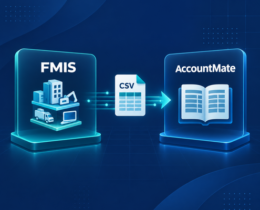 https://www.fmis.co.uk/wp-content/uploads/2026/09/FMIS-AccountMate-Integration-for-FMIS-Fixed-Assets.webp
450
495
John de Robeck
https://www.fmis.co.uk/wp-content/uploads/2026/04/FMISNavyTeal-1-150x80-1.webp
John de Robeck2026-09-09 17:48:582026-09-21 18:12:04AccountMate Fixed Asset Integration with FMIS
https://www.fmis.co.uk/wp-content/uploads/2026/09/FMIS-AccountMate-Integration-for-FMIS-Fixed-Assets.webp
450
495
John de Robeck
https://www.fmis.co.uk/wp-content/uploads/2026/04/FMISNavyTeal-1-150x80-1.webp
John de Robeck2026-09-09 17:48:582026-09-21 18:12:04AccountMate Fixed Asset Integration with FMIS https://www.fmis.co.uk/wp-content/uploads/2026/08/Asset-Depreciation-Methods-.webp
450
500
John de Robeck
https://www.fmis.co.uk/wp-content/uploads/2026/04/FMISNavyTeal-1-150x80-1.webp
John de Robeck2026-08-27 12:51:012026-10-06 03:56:59Asset Depreciation Methods Explained for UK Businesses
https://www.fmis.co.uk/wp-content/uploads/2026/08/Asset-Depreciation-Methods-.webp
450
500
John de Robeck
https://www.fmis.co.uk/wp-content/uploads/2026/04/FMISNavyTeal-1-150x80-1.webp
John de Robeck2026-08-27 12:51:012026-10-06 03:56:59Asset Depreciation Methods Explained for UK Businesses


 SoftwareSuggest Awards – FMIS recognised for easy implementation