Assets Under Construction
A simple guide to accounting for Assets Under Construction (AUC), Work in Progress (WIP) or Construction in Progress (CIP)
Written by: Vicky Stanley • Published: June 7, 2022 • Updated: April 10, 2026

Expert Insight
 Vicky Stanley is a fixed asset accounting specialist with over 20 years of experience in helping companies to manage their fixed assets more effectively.
To speak to one of our consultants please contact us here.
Capital projects can be fairly small, running for just a few weeks, or involve significant resources and run for extended periods, sometimes with multi-million pound budgets. Many types of organisations run capital projects, whether it is to construct a new wing for a hospital building, an extension to a school, or to undertake a major fit out for a new factory.
Regardless of their size, most of these projects will meet the criteria for being classified as capital expenditure that will need to be accounted for as fixed assets. As such, they need to be accounted for consistently and in line with policy for the duration of the project, from the first expenditure on design and planning through to the point where the asset becomes available for use.
Assets under construction can broadly be split into two categories:
Tangible AUC: These are physical assets being built, installed or assembled. Examples include buildings, infrastructure, production lines, data centres and major plant installations. Typical costs include materials, contractor invoices, professional fees (architects, engineers, project managers) and any internal labour directly attributable to bringing the asset to its intended condition.
Intangible AUC: These are non-physical assets in development, most commonly software. An internally developed ERP system, a customer-facing application or a bespoke data platform can all qualify as intangible AUC provided they meet the recognition criteria under IAS 38 or FRS 102 Section 18. Costs include development salaries, third-party development fees and costs incurred during the development phase, once the recognition criteria are met (costs in the research phase are expensed).
AUC assets are recognised on the balance sheet when expenditure is incurred and meets the criteria for capitalisation under the organisation’s accounting policy. Even though the asset is not yet in use, it has a cost to the business, even in its rawest form and before it starts being used. These AUC assets will be capitalised but should not start depreciating until they go into use. At this point, the fixed assets should be transferred out of their AUC category and into their live category, at which point depreciation begins, in line with accounting policy.
The capitalisation threshold that applies to completed assets also applies to AUC. If the total expected cost of a project exceeds the threshold, qualifying costs should be accumulated on the balance sheet as they are incurred, not expensed and then reversed when the project completes.
In an ideal world, when invoices start to flow in against a project they would be neatly allocated to a specific subcategory (for instance, computers, furniture, buildings) even if their main category is AUC. Invoices would also be identified as relating to a specific fixed asset, rather than a general pool. If this happens, the task of moving these into a live category upon project completion is simple. The subcategory helps identify which main category they go to and no further analysis is needed.
Of course, things are not always that simple. General expenses built up under an AUC or WIP account may need to be reviewed in detail, either at specific project milestones or at the end of the project, and allocated to specific asset categories before being moved into their live accounts. How complex this exercise becomes depends on how well the costs were coded during the project. Organisations that invest time in proper cost coding at the point of invoice approval will find the transfer to live assets far more straightforward than those that accumulate everything into a single pool and sort it out later.
Interest costs: Under IAS 23, borrowing costs directly attributable to the acquisition, construction or production of a qualifying asset are required to be capitalised as part of the cost of that asset. Under FRS 102, capitalisation of borrowing costs is permitted but not required. The policy adopted should be applied consistently and documented.
Impairment: AUC assets are not depreciated, but they are not exempt from impairment review. If a project is delayed significantly, descoped or abandoned, the carrying amount must be tested for impairment by comparing carrying amount to recoverable amount. An impairment loss should be recognised if the asset’s value has fallen below its accumulated cost.
Componentisation: For large projects (particularly buildings), the completed asset may need to be split into separately depreciable components. Planning for this during the AUC phase, by coding costs to components from the outset, is far easier than decomposing a single lump-sum asset after the fact.
Assets under construction present a specific control challenge. Costs accumulate over months or years, often across multiple invoices, suppliers and cost codes. Without proper controls, expenditure can be capitalised that should have been expensed, or revenue expenditure can sit in the AUC account long after the project has completed.
The following controls should be in place for any organisation with active capital projects.
Capitalisation approval at project level. Before costs begin accumulating, the project should be formally approved as capital expenditure. This approval should reference the capitalisation policy, confirm the expected total cost exceeds the threshold, and identify the asset class the completed asset will transfer into.
Cost coding at the point of invoice approval. Every invoice charged to a capital project should be coded to a specific project, phase or component at the time it is approved for payment. Coding costs after the fact, from a general pool, introduces error and is difficult to audit.
Periodic review of AUC balances. Finance should review the AUC register at each reporting period to confirm that projects are still active, that accumulated costs are reasonable relative to budget, and that no completed projects are still sitting in AUC. A project that is available for use but remains in AUC will delay depreciation recognition and misstate fixed asset balances.
Transfer authorisation. The transfer from AUC to the live asset register should require formal sign-off from both the project manager (confirming the asset is available for use) and finance (confirming the cost allocation and the depreciation parameters are correct).
Write-off and impairment review. Abandoned or significantly descoped projects should be identified promptly. Costs that no longer relate to an asset the organisation expects to use should be written off through the income statement, not left to accumulate in AUC indefinitely.
Auditors pay close attention to AUC because it is an area where judgement is involved: what qualifies as capital versus revenue expenditure, when an asset is “available for use”, and how costs are allocated to components. The audit trail for AUC needs to be stronger than for routine fixed assets, not weaker.
At a minimum, the audit trail should include:
If the auditor has to reconstruct this trail from email threads, spreadsheet tabs and filing cabinets, the audit will take longer and the risk of qualification increases. A single system that holds the project approval, the cost accumulation, the transfer and the depreciation in one record makes the audit process significantly more straightforward.
Many organisations manage their AUC balances in spreadsheets, or rely on basic functionality within their ERP’s fixed asset module. Both approaches carry risks that increase with the number of active projects and the value involved.
Spreadsheets are flexible and familiar, but they do not provide the level of control required for managing AUC at scale. There is no access control, no approval workflow, no automatic audit trail and no link to the general ledger. Costs are entered manually, formulas can be overwritten, and version control depends entirely on file naming discipline.
Common problems include:
For any organisation with more than a handful of capital projects, a spreadsheet is typically suitable only for smaller volumes and can introduce audit risk as complexity increases.
Most ERP platforms include a fixed asset module, and some offer basic capital project tracking. The advantage is integration with the general ledger and purchasing. ERP capital project functionality is often designed as an add-on, which can limit flexibility for more complex requirements.
Typical limitations include:
Customising the ERP to fill these gaps is possible but expensive, and the customisation creates upgrade risk every time the ERP vendor releases a new version.
Capital project software, such as the FMIS Capital Projects module, is designed to support this workflow. It provides budget version control, requisition and purchase order processing, invoice matching with exception handling, and visibility of budget vs commitment vs spend at every level. Projects can be capitalised and posted through to the fixed asset register within a controlled workflow, with the full cost history and audit trail carried across.
Because the capital project, the AUC balance, and the live fixed asset all sit in the same system, reconciliation to the general ledger is handled automatically. Finance teams spend less time on manual matching and more time on the judgement calls that actually require their expertise: whether costs qualify for capitalisation, when an asset is available for use, and how to allocate costs to components.

 https://www.fmis.co.uk/wp-content/uploads/2026/09/FMIS-Fixed-Assets-version-12.47-product-update.webp
396
495
John de Robeck
https://www.fmis.co.uk/wp-content/uploads/2026/04/FMISNavyTeal-1-150x80-1.webp
John de Robeck2026-09-17 15:15:282026-09-17 15:15:30What is new in FMIS Fixed Assets version 12.47
https://www.fmis.co.uk/wp-content/uploads/2026/09/FMIS-Fixed-Assets-version-12.47-product-update.webp
396
495
John de Robeck
https://www.fmis.co.uk/wp-content/uploads/2026/04/FMISNavyTeal-1-150x80-1.webp
John de Robeck2026-09-17 15:15:282026-09-17 15:15:30What is new in FMIS Fixed Assets version 12.47 https://www.fmis.co.uk/wp-content/uploads/2026/09/FMIS-Lease-Accounting-version-12.47-product-update.webp
396
495
John de Robeck
https://www.fmis.co.uk/wp-content/uploads/2026/04/FMISNavyTeal-1-150x80-1.webp
John de Robeck2026-09-17 15:14:582026-09-17 15:15:01What is new in FMIS Lease Accounting version 12.47
https://www.fmis.co.uk/wp-content/uploads/2026/09/FMIS-Lease-Accounting-version-12.47-product-update.webp
396
495
John de Robeck
https://www.fmis.co.uk/wp-content/uploads/2026/04/FMISNavyTeal-1-150x80-1.webp
John de Robeck2026-09-17 15:14:582026-09-17 15:15:01What is new in FMIS Lease Accounting version 12.47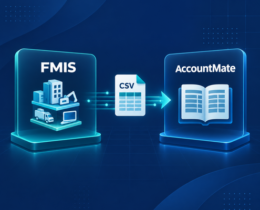 https://www.fmis.co.uk/wp-content/uploads/2026/09/FMIS-AccountMate-Integration-for-FMIS-Fixed-Assets.webp
450
495
John de Robeck
https://www.fmis.co.uk/wp-content/uploads/2026/04/FMISNavyTeal-1-150x80-1.webp
John de Robeck2026-09-09 17:48:582026-09-21 18:12:04AccountMate Fixed Asset Integration with FMIS
https://www.fmis.co.uk/wp-content/uploads/2026/09/FMIS-AccountMate-Integration-for-FMIS-Fixed-Assets.webp
450
495
John de Robeck
https://www.fmis.co.uk/wp-content/uploads/2026/04/FMISNavyTeal-1-150x80-1.webp
John de Robeck2026-09-09 17:48:582026-09-21 18:12:04AccountMate Fixed Asset Integration with FMIS https://www.fmis.co.uk/wp-content/uploads/2026/08/Asset-Depreciation-Methods-.webp
450
500
John de Robeck
https://www.fmis.co.uk/wp-content/uploads/2026/04/FMISNavyTeal-1-150x80-1.webp
John de Robeck2026-08-27 12:51:012026-10-06 03:56:59Asset Depreciation Methods Explained for UK Businesses
https://www.fmis.co.uk/wp-content/uploads/2026/08/Asset-Depreciation-Methods-.webp
450
500
John de Robeck
https://www.fmis.co.uk/wp-content/uploads/2026/04/FMISNavyTeal-1-150x80-1.webp
John de Robeck2026-08-27 12:51:012026-10-06 03:56:59Asset Depreciation Methods Explained for UK Businesses


 Asset Tracking and Telematics 2022