FMIS Software
  • Home
  • Solutions
    • Fixed Asset Management Systems
      • Capital Projects
      • Enterprise Asset Management
      • Fixed Asset Management Software
    • Asset Tracking
      • Barcode Tracking
      • FMIS Mobile Asset Manager
    • Purchase to Pay
      • Purchase Order Processing
      • Sales Order Processing
    • Stock and Inventory
      • Kitting and Assembly
      • Material Requirements Planning (MRP)
      • Production Control
    • Equipment Maintenance
      • Field Service Management
    • Lease Accounting
      • Order Management
  • Market Sectors
    • Commercial and Retail
    • Education
    • Government
    • Health
    • Manufacturing
    • Non-Profit
    • Oil, Gas and Energy
  • Partners
    • Deltek
    • Find a partner
    • Become a Partner
  • Resources
    • Trust Centre
    • News and articles
    • Case studies
    • Fixed asset management guide
  • About us
  • Contact
    • Request a demo
    • Pricing
    • Product information
    • Customer Support
    • Careers
    • Training Feedback
  • Click to open the search input field Click to open the search input field Search
  • Menu Menu
You are here: Home1 / Solutions2 / Asset Tracking3 / What is Barcode Asset Tracking

What is Barcode Asset Tracking?

Learn how and why barcodes, QR Codes and RFID asset tags can help you to track assets and equipment faster and more accurately

Written by: John de Robeck • Published: October 3, 2022 • Updated: March 10, 2026
Barcode Asset Tracking
  • About Barcodes
  • History
  • Benefits
  • Barcodes vs RFID

What is Barcode Asset Tracking?

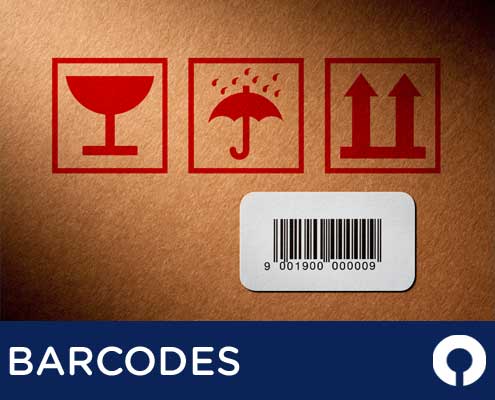
In a wide range of industries, barcodes are used to track assets and inventory, control stock levels, and streamline equipment lending. By removing the hassle and risk of human error in manual data entry, barcode tracking makes it easier to stay in control of an organisation’s assets and gain real-time visibility.

Let’s take a closer look at barcode asset tracking and how it compares to alternative tracking solutions such as RFID tags.

Barcodes: a brief history

Barcodes are a way of visually representing data in a form that machines can read. When you point a barcode reader (optical scanner) or mobile phone at a barcode label, the barcode scanner can access the information represented by the code.

First invented and patented in the US in 1951, the original barcode was influenced by the dots and dashes of Morse code which inspired the thick and thin bars that are a distinctive key feature of barcodes. Initially used with limited popularity in industrial settings, barcode labels later became a success when used in supermarket checkouts in the 1970s.

Today, barcodes are used in a wide range of situations including on event tickets and in shops, so much so that more than six billion barcodes and QR codes are currently scanned every day. There are many different types of barcodes including the distinctive QR and data matrix codes which are formatted as squares rather than bars. Highly accurate and reliable, barcode systems are used in many industries as part of an asset tracking system.

How barcodes are used with asset tracking software

A barcode system can be used for tracking physical assets. First, a barcode must be assigned to an asset. Barcodes may be generated directly from an asset tracking system and the tags printed individually, but since the barcode is usually just a numerical identifier for the asset, it may be easier and quicker to use a pre-printed roll of asset tags and then link the barcode with the asset. After the barcode is affixed to the asset, it can be scanned using a barcode scanner or mobile phone to instantly access and update the software’s asset register. Barcodes can be placed on fixed assets or current assets such as stock and inventory for easier tracking.

Using barcodes with asset tracking software allows users to view and update an asset’s maintenance schedule and history, check-in/check-out status, depreciation lifecycle, and other resources or records linked to the item (photos and warranty information included).

Benefits of using barcodes in asset management

Barcodes are very useful when paired with good asset tracking software for a number of reasons.

Improve asset tracking accuracy

Improved accuracy

With barcode scanning, organisations can boost accuracy and reduce the risk of human error. Without the need for manual data entry, information about assets can be updated and viewed instantaneously using the software. Moreover, using barcode tracking cuts out data duplication to further improve the accuracy of asset tracking.

Save time and money

Save money and time

With a barcode asset tracking system, there’s no need to waste time or money tracking assets manually. Tags can be printed cheaply on-site or ordered from a distributor making asset tagging quick and easy. Good asset tracking software is usually intuitive, so staff should be able to pick it up quickly with some training reducing the chance of process errors. Barcode asset tracking has the capacity to greatly reduce the time and resources required to track and manage assets effectively.

Improved audits

Conduct audits more efficiently

Auditing assets is a simple process with barcode scanning. All you need to do is scan the tags using a handheld barcode scanner or mobile device to identify the unique asset. The software record will display data about location history, condition, maintenance, use, and more with a single click. With quick and efficient audits, it becomes easier than ever to ensure compliance with all relevant financial and accounting standards.

Flexible asset tracking

Handle a range of scenarios

Barcoding can help track a wide range of actions across the asset lifecycle, making it a valuable tool for different areas of the business. The asset lifecycle typically may include assignments, transfers, disposals, damages, repairs, item location, and goods receipt to match PO (additions). Using barcodes for tracking assets and equipment can enhance your organisation’s visibility across all these areas.

Barcode vs RFID tracking

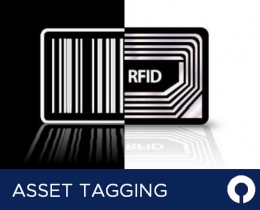
Another asset tracking tool that is often compared to barcoding is RFID. An RFID (Radio-Frequency Identification) system uses tags with chips that emit radio waves. An RFID reader can receive these radio waves and access the stored data. While barcodes work by pointing the scanner at the barcode label, RFID radio waves can be picked up at longer distances with no requirement for a line of sight.

RFID tags can store up to 4 million characters and in some circumstances can be more durable and long-lasting than barcodes, but not always. An RFID system is more complex to implement for asset tracking and is also more expensive than barcode technology.

Learn more about the differences between barcodes and RFID systems here.

Is barcode asset tracking right for you?

Barcoding can be used in a range of different sectors, from manufacturing and education to healthcare. Tracking assets using barcodes is an easy way to save time and money in your organisation, even with relatively low asset volumes to track, making it cost-effective, more accurate and easier to maintain than manual asset tracking tools.

For a cost-effective and easy-to-use solution to asset tracking, try FMIS Asset Tracking. Integrated with our Fixed Asset Management and Equipment Maintenance software modules, asset barcode tagging allows you to streamline physical audits, improve asset visibility, and reduce operational costs and write-offs. The software works with any compatible barcode scanner such as a USB scanner or iOS/Android mobile device, making this a perfect solution for asset tracking and maintenance in the field.
Find out more

For more information on how FMIS can help you effectively barcode, track and manage your assets and equipment, please get in touch with an FMIS consultant or call us on +44 (0) 1227 773003.

Share this entry
  • Share on Facebook
  • Share on X
  • Share on WhatsApp
  • Share on Pinterest
  • Share on LinkedIn
  • Share on Tumblr
  • Share on Reddit
  • Share by Mail
G-Cloud 15 - Government Commercial Agency Supplier logo

FMIS awarded G-Cloud 15 supplier status

August 12, 2026
FMIS Asset Management Software awarded G-Cloud 15 Supplier Status for Fixed Asset Management, Lease Accounting, Asset Tracking & Equipment Maintenance software.
https://www.fmis.co.uk/wp-content/uploads/2026/08/GCA-Supplier-logo-G-cloud-15-500px.webp 500 500 John de Robeck https://www.fmis.co.uk/wp-content/uploads/2026/04/FMISNavyTeal-1-150x80-1.webp John de Robeck2026-08-12 16:28:312026-08-17 14:18:48FMIS awarded G-Cloud 15 supplier status
UK public-sector indexation

Indexation in UK Public Sector Fixed Asset Accounting

April 15, 2026
Understanding how indexation fits alongside revaluation is now essential for finance teams managing non-current assets in the public sector.
https://www.fmis.co.uk/wp-content/uploads/2026/03/UK-public-sector-indexation.webp 1024 1536 John de Robeck https://www.fmis.co.uk/wp-content/uploads/2026/04/FMISNavyTeal-1-150x80-1.webp John de Robeck2026-04-15 11:59:412026-04-15 11:59:44Indexation in UK Public Sector Fixed Asset Accounting
Non-Current Assets vs Fixed Assets In the UK public-sector

Why the UK Public Sector Is Moving from Fixed Assets to Non Current Assets

March 20, 2026
Why is the UK public sector shifting to non-current assets, and how does FMIS software enhance control and compliance?
https://www.fmis.co.uk/wp-content/uploads/2026/03/Non-Current-Assets-vs-Fixed-Assets.webp 500 500 Vicky Stanley https://www.fmis.co.uk/wp-content/uploads/2026/04/FMISNavyTeal-1-150x80-1.webp Vicky Stanley2026-03-20 15:49:272026-03-20 15:54:11Why the UK Public Sector Is Moving from Fixed Assets to Non Current Assets
SORP_Lease_Accounting_changes_2026

Preparing for Charities SORP Lease Accounting Changes 2026

February 23, 2026
https://www.fmis.co.uk/wp-content/uploads/2026/02/SORP-Lease-Accounting-Changes-2026.webp 1024 1024 John de Robeck https://www.fmis.co.uk/wp-content/uploads/2026/04/FMISNavyTeal-1-150x80-1.webp John de Robeck2026-02-23 11:00:512026-03-18 08:50:32Preparing for Charities SORP Lease Accounting Changes 2026
Barcodes vs RFID in asset tracking

Barcodes vs RFID in Asset Tracking

December 9, 2015
Web Based Asset Tracking

Why Use Web-Based Asset Tracking?

September 29, 2022
Asset Management vs Asset Tracking

Asset Management vs Asset Tracking – What is the Difference?

September 29, 2022
Asset Tracking and Telematics event 2022

Asset Tracking and Telematics 2022

June 7, 2022
Support Icon
Can we help?
Book a demo View products Contact support
Or call: +44 (0) 1227 773003
Mon–Fri, 9:00–17:00 (BST/GMT)

Explore More

  • FMIS awarded G-Cloud 15 supplier status
  • Indexation in UK Public Sector Fixed Asset Accounting
  • Why the UK Public Sector Is Moving from Fixed Assets to Non Current Assets
  • Preparing for Charities SORP Lease Accounting Changes 2026
  • FRS 102 lease accounting changes 2026: what UK organisations need to know

SOLUTIONS

  • Fixed Asset Management Systems
  • Asset Tracking
  • Purchase to Pay
  • Order Management
  • Equipment Maintenance
  • Lease Accounting
  • Stock and Inventory
  • View all solutions

Home › What is Barcode Asset Tracking

Market Sectors

  • Commercial and Retail
  • Education
  • Local and Central Government
  • NHS and Health
  • Manufacturing
  • Non-profit
  • Oil, Gas and Energy

FOLLOW US

FMIS Twitter FMIS Linkedin

CONTACT US

FMIS Ltd
167b John Wilson Business Park
Whitstable
Kent
CT5 3RA
United Kingdom

Phone:+44 (0) 1227 773003
Fax:+44 (0) 1227 773005
Sales:sales@fmis.co.uk
Support:support@fmis.co.uk

Copyright © 2024 - All rights reserved www.fmis.co.uk
  • Privacy Policy
  • Cookie Policy
Link to: Asset Management vs Asset Tracking – What is the Difference? Link to: Asset Management vs Asset Tracking – What is the Difference? Asset Management vs Asset Tracking – What is the Difference?Asset Management vs Asset Tracking Link to: What is Lease Administration Software? Link to: What is Lease Administration Software? Lease Administration SoftwareWhat is Lease Administration Software?
Scroll to top