Optimising Fixed Asset Lifecycles
Discover how to manage fixed assets efficiently from acquisition through disposal, ensuring cost savings and compliance.
Written by: John de Robeck • Published: October 25, 2024 • Updated: March 10, 2026


Managing the fixed assets lifecycle effectively —from acquisition to disposal—is critical to optimising performance, reducing costs, and ensuring compliance. Asset lifecycle management is essential for effective fixed asset management and helps businesses maximise the value of their physical assets, improve operational efficiency, and prevent unexpected breakdowns.
In this article, we will explore best practices for each stage of the fixed asset lifecycle, from acquisition and maintenance to eventual disposal. We’ll also highlight how advanced tools like FMIS Fixed Asset Accounting software can simplify management and boost asset performance.
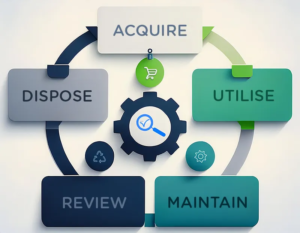
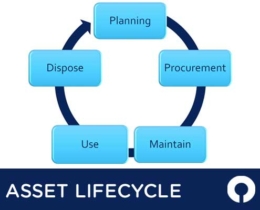
The asset lifecycle comprises five critical stages: acquisition, utilisation, maintenance, review, and disposal. Each stage is vital in determining an asset’s overall value and efficiency. By carefully managing each phase, businesses can optimise performance, extend asset lifespan, and reduce costs.
Acquisition: This involves identifying and procuring assets that provide long-term value. Proper planning during this stage helps to align asset purchases with business goals and budget constraints.
Utilisation: Ensuring the asset is used efficiently and within its intended capacity to avoid wear and tear that could shorten its useful life.
Maintenance: Regular, preventive maintenance ensures that assets remain in good working condition, preventing costly repairs and reducing downtime.
Review: Periodic evaluations to determine whether to refurbish, upgrade, or replace an asset based on its performance and remaining useful life.
Disposal: When an asset reaches the end of its lifecycle, responsible disposal or resale can recover some value and reduce environmental impact.
Effective asset lifecycle management requires implementing strategies that optimise asset performance, reduce downtime, and extend the useful life of assets. By following these best practices, businesses can manage their assets efficiently and cost-effectively.
Implement Asset Management Software: Tools like FMIS Fixed Asset Accounting enable businesses to automate tracking, maintenance schedules, and reporting, providing real-time visibility over asset performance.
Focus on Preventive Maintenance: Scheduling regular maintenance prevents unexpected breakdowns, reducing downtime and repair costs while extending asset longevity.
Monitor and Evaluate Performance: Regularly assess the performance of assets to make informed decisions about repairs, upgrades, or disposal. Data-driven insights can highlight underperforming assets, helping improve resource allocation.
Ensure Compliance: Keep accurate records of asset values, depreciation schedules, and maintenance histories to maintain compliance with financial reporting standards and regulations.
Asset management software is crucial in optimising fixed asset lifecycle. Solutions like FMIS Fixed Asset Accounting provide tools that streamline processes, increase transparency, and enhance efficiency across large asset portfolios.
Efficiency and Automation: Asset management software automates time-consuming tasks such as depreciation calculations, asset tracking, and maintenance schedules, allowing businesses to focus on strategic decision-making.
Real-Time Insights: The software offers real-time insights into asset performance, helping asset managers track utilisation, condition, and location with ease.
Compliance and Reporting: Accurate financial reporting is essential for compliance. Asset management software ensures all asset values, depreciation, and maintenance data are up-to-date and readily available for audits.
The acquisition phase is critical, as it sets the foundation for an asset’s entire lifecycle. Making informed decisions during this stage ensures that the asset meets operational needs and provides long-term value.
Cost-Benefit Analysis: Before acquiring an asset, conduct a thorough cost-benefit analysis. Consider not just the initial purchase cost but also the total cost of ownership, including maintenance, operation, and eventual disposal.
Long-Term Value Assessment: Evaluate the asset’s expected lifespan, efficiency, and how well it aligns with business objectives. A poor acquisition decision can lead to higher lifecycle costs and reduced returns on investment.
| Upfront Purchase | Leasing |
|---|---|
| Higher initial cost but full ownership of the asset. | Lower upfront cost but no ownership at the end of the lease term. |
| Maintenance and repair costs are borne by the owner. | Maintenance may be included in the lease, reducing out-of-pocket expenses. |
| Asset value depreciates over time, impacting resale value. | Under new accounting standards such as IFRS 16 and ASC 842, most leases are treated as right-of-use assets and subject to depreciation, along with continuous lease payments. |
| Tax benefits through asset depreciation. | Possible tax benefits through deducting lease payments as expenses. |
| Long-term cost savings if the asset is used for its full lifespan. | Flexibility to upgrade or return the asset at the end of the lease term. |
FMIS Purchasing: The acquisition phase can be streamlined with FMIS Purchasing, which helps manage the entire procurement process from purchase orders to goods receipt and accounts payable. FMIS Purchasing ensures accurate and efficient asset acquisition by automating and tracking these activities. Ultimately, this data seamlessly integrates with the FMIS Fixed Asset Register, allowing the smooth transfer of acquired assets into the system for ongoing management and reporting.

Assets under construction (AUC) refer to assets that are not yet ready for use and are still being built or developed. These assets are capitalised during the construction phase and are not depreciated until they are placed into service. The costs associated with AUC are tracked separately from other assets in the financial statements.
Once the construction is complete, the asset is reclassified and included in the company’s regular fixed assets, where depreciation begins. For more detailed guidance on how to account for assets under construction, please refer to this article.

Once assets are acquired, it is essential to ensure they are utilised effectively to maximise their value and operational efficiency. Proper asset utilisation involves tracking where assets are deployed, monitoring their usage, and ensuring they are used within their capacity to avoid unnecessary wear and tear. Efficient utilisation reduces downtime and ensures that assets contribute optimally to business operations.
By actively managing asset utilisation, businesses can improve productivity and minimise the risks associated with asset misallocation or underutilisation.
FMIS Asset Tracking: FMIS Asset Tracking plays a crucial role in helping businesses know exactly what assets they have, where they are being used, and who is responsible for them. The system provides real-time visibility into asset locations and status, enabling more efficient management and ensuring that assets are utilized effectively across the organization.

Preventive maintenance is essential for extending the lifespan of assets and minimising the risk of unexpected failures. By proactively maintaining equipment, businesses can reduce repair costs, improve performance, and increase asset reliability.
Maintenance Strategies: Implement a preventive maintenance plan that schedules regular inspections, servicing, and minor repairs to keep assets in optimal condition. This approach prevents costly breakdowns and downtime.
Using FMIS for Maintenance: FMIS Fixed Asset Accounting allows businesses to automate maintenance schedules, ensuring that all assets are serviced at the right intervals. The system tracks maintenance histories, making it easy to identify patterns and address recurring issues.
Reducing Costs and Downtime: Preventive maintenance helps avoid the high costs associated with emergency repairs and minimises downtime that could disrupt business operations.
FMIS Equipment Maintenance: To ensure asset longevity, FMIS Equipment Maintenance provides a comprehensive solution for scheduling and tracking preventive maintenance. This system helps reduce unexpected breakdowns by automating maintenance schedules and keeping a detailed history of service activities. By using FMIS Equipment Maintenance, businesses can improve asset reliability, minimise downtime, and extend the useful life of their assets.
The review stage is essential in the asset lifecycle, as it helps determine whether an asset should be replaced, refurbished, or retired. Regular asset reviews allow businesses to assess the asset’s current condition, remaining useful life, and overall performance to make informed decisions on its future.
Factors to Consider: Key factors in the review process include the asset’s maintenance history, operating costs, and the value it adds to the business. If maintenance costs are rising or the asset frequently fails to meet performance standards, it may be more cost-effective to replace it. Conversely, if the asset can be refurbished to extend its life at a reasonable cost, this can provide continued value without the need for a full replacement.
Timing Decisions: Knowing when to retire or refurbish an asset is just as important as knowing how. Scheduled reviews and performance tracking help businesses make proactive decisions, minimizing downtime and reducing unexpected costs associated with reactive replacements.
When disposing of a fixed asset, it is essential to account for the financial impact accurately. The method of disposal affects both the balance sheet and income statement, and businesses must choose the appropriate accounting approach based on the circumstances.
Sale of Asset: If the asset is sold, the difference between the sale price and the asset’s book value (original cost minus accumulated depreciation) is recorded as a gain or loss. A gain increases net income, while a loss reduces it.
Scrapping or Abandonment: When an asset is scrapped or abandoned without generating any proceeds, the full book value of the asset is written off as a loss on the income statement. This reflects the remaining value of the asset that was not recovered through sale or salvage.
Trade-In or Exchange: In some cases, assets can be traded in for new equipment. The accounting treatment depends on whether the trade is considered a like-kind exchange or not. A gain or loss may still need to be recognized, depending on the value of the new asset received in exchange.
Donations: If an asset is donated, it is written off the books at its book value. There is generally no gain or loss, but the donation may qualify as a charitable deduction for tax purposes.
FMIS Fixed Assets: Once an asset has reached the end of its useful life, FMIS Fixed Assets makes the disposal process seamless. Whether through sale, scrapping, or trade-in, the system ensures accurate accounting by recording gains or losses from disposals and maintaining compliance with regulatory requirements. FMIS Fixed Assets helps businesses manage all disposals while ensuring the financial impact is correctly reflected.
Effective fixed asset lifecycle management—from acquisition to disposal—ensures businesses can optimise asset performance, reduce costs, and maintain compliance. By leveraging asset management best practices, including using software like FMIS Fixed Asset Accounting, companies can streamline their processes, extend asset lifespans, and improve the accuracy of financial reporting.
Through strategic planning, preventive maintenance, and efficient disposal practices, businesses can maximise the value of their fixed assets and support long-term operational success.
 https://www.fmis.co.uk/wp-content/uploads/2024/03/SoftwareSuggest-Awards-2024-495x400-1.webp
400
495
John de Robeck
https://www.fmis.co.uk/wp-content/uploads/2026/04/FMISNavyTeal-1-150x80-1.webp
John de Robeck2024-03-26 10:29:322026-03-10 10:57:34SoftwareSuggest Awards – FMIS recognised for easy implementation
https://www.fmis.co.uk/wp-content/uploads/2024/03/SoftwareSuggest-Awards-2024-495x400-1.webp
400
495
John de Robeck
https://www.fmis.co.uk/wp-content/uploads/2026/04/FMISNavyTeal-1-150x80-1.webp
John de Robeck2024-03-26 10:29:322026-03-10 10:57:34SoftwareSuggest Awards – FMIS recognised for easy implementation https://www.fmis.co.uk/wp-content/uploads/2023/10/Asset-Valuation-Methods-495x400-1.jpg
400
495
John de Robeck
https://www.fmis.co.uk/wp-content/uploads/2026/04/FMISNavyTeal-1-150x80-1.webp
John de Robeck2023-10-26 13:16:202026-07-01 10:14:59Asset Valuation Methods
https://www.fmis.co.uk/wp-content/uploads/2023/10/Asset-Valuation-Methods-495x400-1.jpg
400
495
John de Robeck
https://www.fmis.co.uk/wp-content/uploads/2026/04/FMISNavyTeal-1-150x80-1.webp
John de Robeck2023-10-26 13:16:202026-07-01 10:14:59Asset Valuation Methods https://www.fmis.co.uk/wp-content/uploads/2019/06/Feature-image-495x400.jpg
400
495
John de Robeck
https://www.fmis.co.uk/wp-content/uploads/2026/04/FMISNavyTeal-1-150x80-1.webp
John de Robeck2019-12-18 11:23:412026-03-10 11:09:42FMIS announces new NHS partnership
https://www.fmis.co.uk/wp-content/uploads/2019/06/Feature-image-495x400.jpg
400
495
John de Robeck
https://www.fmis.co.uk/wp-content/uploads/2026/04/FMISNavyTeal-1-150x80-1.webp
John de Robeck2019-12-18 11:23:412026-03-10 11:09:42FMIS announces new NHS partnership https://www.fmis.co.uk/wp-content/uploads/2019/11/Govmoney2019-495x400.jpg
400
495
John de Robeck
https://www.fmis.co.uk/wp-content/uploads/2026/04/FMISNavyTeal-1-150x80-1.webp
John de Robeck2019-12-02 17:25:102026-03-10 11:09:51FMIS to sponsor GovMoney 2019
https://www.fmis.co.uk/wp-content/uploads/2019/11/Govmoney2019-495x400.jpg
400
495
John de Robeck
https://www.fmis.co.uk/wp-content/uploads/2026/04/FMISNavyTeal-1-150x80-1.webp
John de Robeck2019-12-02 17:25:102026-03-10 11:09:51FMIS to sponsor GovMoney 2019



 G-Cloud 14 Approved Supplier