Secure Development
Secure development lifecycle and coding practices at FMIS

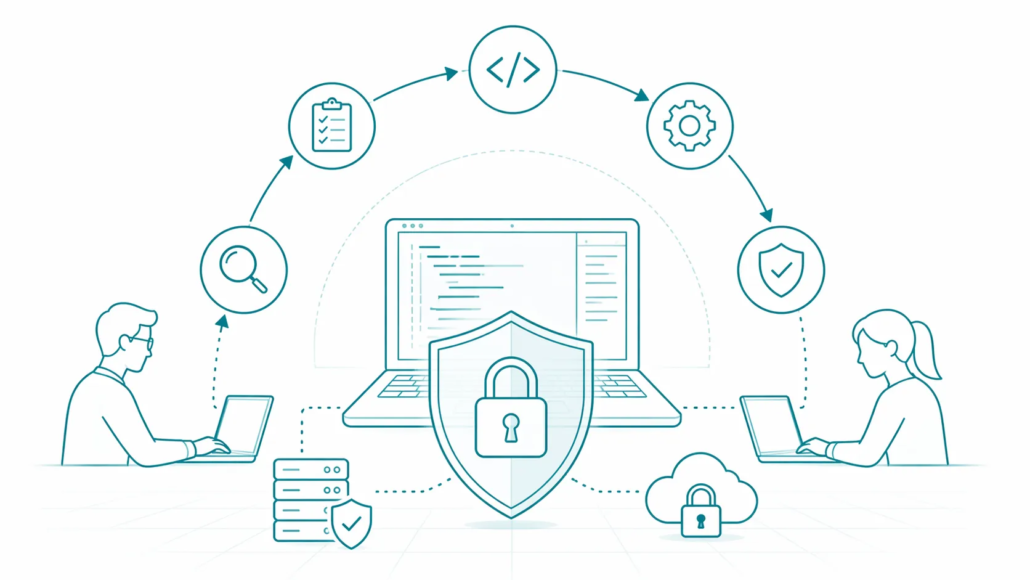
Security is built into how FMIS systems are designed, developed, and released. This is managed through a structured development approach, supported by defined controls and aligned to recognised standards.

If you have questions about security, data protection, or require documentation for a review, get in touch with our team.
Email our team Privacy policy Cookie policy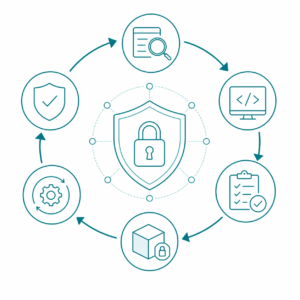
FMIS follows a secure software development lifecycle (SDLC). Security is considered at each stage, from initial design through to release and ongoing maintenance.
This includes:
This structure ensures that changes are introduced in a consistent and controlled way.

Security controls are applied during development to reduce the risk of vulnerabilities.
This includes:
These practices are applied as part of day-to-day development, not as a separate activity.
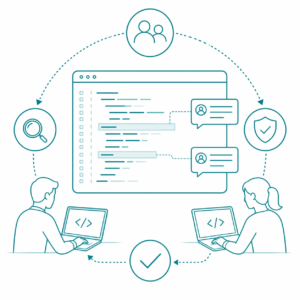
Code is reviewed and tested before release to ensure both functionality and security.
This helps ensure that changes are stable and do not introduce unintended risks.

Security testing forms part of the development lifecycle.
Recent scanning has confirmed that hosted environments are securely configured, with no outstanding critical issues identified following remediation.

Security is reviewed and updated over time.
This ensures that development practices remain aligned with current standards and evolving risks.
If you require additional detail on development practices or security controls, please contact:
 https://www.fmis.co.uk/wp-content/uploads/2026/09/FMIS-Lease-Accounting-version-12.47-product-update.webp
396
495
John de Robeck
https://www.fmis.co.uk/wp-content/uploads/2026/04/FMISNavyTeal-1-150x80-1.webp
John de Robeck2026-09-17 15:14:582026-09-17 15:15:01What is new in FMIS Lease Accounting version 12.47
https://www.fmis.co.uk/wp-content/uploads/2026/09/FMIS-Lease-Accounting-version-12.47-product-update.webp
396
495
John de Robeck
https://www.fmis.co.uk/wp-content/uploads/2026/04/FMISNavyTeal-1-150x80-1.webp
John de Robeck2026-09-17 15:14:582026-09-17 15:15:01What is new in FMIS Lease Accounting version 12.47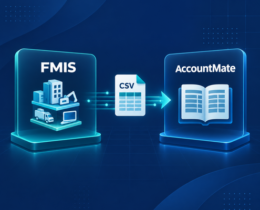 https://www.fmis.co.uk/wp-content/uploads/2026/09/FMIS-AccountMate-Integration-for-FMIS-Fixed-Assets.webp
450
495
John de Robeck
https://www.fmis.co.uk/wp-content/uploads/2026/04/FMISNavyTeal-1-150x80-1.webp
John de Robeck2026-09-09 17:48:582026-09-21 18:12:04AccountMate Fixed Asset Integration with FMIS
https://www.fmis.co.uk/wp-content/uploads/2026/09/FMIS-AccountMate-Integration-for-FMIS-Fixed-Assets.webp
450
495
John de Robeck
https://www.fmis.co.uk/wp-content/uploads/2026/04/FMISNavyTeal-1-150x80-1.webp
John de Robeck2026-09-09 17:48:582026-09-21 18:12:04AccountMate Fixed Asset Integration with FMIS https://www.fmis.co.uk/wp-content/uploads/2026/03/Book-Value-Accumulated-Depreciation.webp
450
500
John de Robeck
https://www.fmis.co.uk/wp-content/uploads/2026/04/FMISNavyTeal-1-150x80-1.webp
John de Robeck2026-08-27 12:50:062026-09-28 05:18:31Net Book Value (NBV) Explained : Formula, Calculation, and Examples
https://www.fmis.co.uk/wp-content/uploads/2026/03/Book-Value-Accumulated-Depreciation.webp
450
500
John de Robeck
https://www.fmis.co.uk/wp-content/uploads/2026/04/FMISNavyTeal-1-150x80-1.webp
John de Robeck2026-08-27 12:50:062026-09-28 05:18:31Net Book Value (NBV) Explained : Formula, Calculation, and Examples https://www.fmis.co.uk/wp-content/uploads/2026/08/what-is-capital-allowance.webp
450
500
John de Robeck
https://www.fmis.co.uk/wp-content/uploads/2026/04/FMISNavyTeal-1-150x80-1.webp
John de Robeck2026-08-27 12:49:562026-09-28 05:12:35Capital Allowances Explained: A UK Guide for Businesses
https://www.fmis.co.uk/wp-content/uploads/2026/08/what-is-capital-allowance.webp
450
500
John de Robeck
https://www.fmis.co.uk/wp-content/uploads/2026/04/FMISNavyTeal-1-150x80-1.webp
John de Robeck2026-08-27 12:49:562026-09-28 05:12:35Capital Allowances Explained: A UK Guide for Businesses
