Lease Accounting
IFRS 16 and ASC 842 lease accounting software for real estate and equipment

IFRS 16 and ASC 842 lease accounting software for real estate and equipment
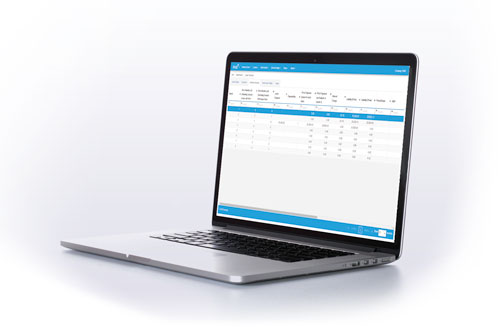




Key features
✓ Ensure compliance with the latest IFRS and FASB lease accounting standards
✓ Track all agreements, including real estate, equipment and retail leases
✓ Automatically calculate adjustments to the right-of-use asset (ROU) and lease liability to produce general ledger postings and schedules
✓ Easily manage lease data using intuitive Excel import and export features in the software
✓ Track mid-term lease adjustments and early settlements
✓Report on end-of-lease term dates
✓ Maintain the right-of-use asset details
✓ Manage large lease volumes easily with fast processing and batch updates
✓ Comprehensive reporting of leases at any level
✓ Bulk changes, including loading new agreements, mid-term adjustments and batched deletions
Flexible Calculation Rules
✓ Actuarial calculation of interest charges
✓ Advance and arrears options
✓ Variety of payment cycles, including monthly, quarterly, annually
✓ Right of use asset calculations and related asset amendment due to midterm adjustments
✓ Ability to close periods preventing reconciliation issues
Adjustments and changes
✓ Make adjustments mid-term or from the start of the lease term
✓ Track changes to payments and lease term
✓ Easily implement interest rate changes
✓ Automatic updates to lease payment schedules and lease liabilities following mid-term adjustments
Simple lease administration
✓ bulk import new leases or create them individually
✓ Load and manage adjustments
✓ Check period totals
✓ Correct leases and re-run periods
✓ Produce lease accounting reports and postings
✓ Lock and restore periods
Lease payment schedules
✓ Annual, monthly, quarterly and other lease payment schedules
✓ Lease payments at the beginning or end of a period
✓ Lease schedule produced for the full life of the lease
✓ Record present value of lease payments
✓ Show interest charges per period
✓ Non-lease payments such as service charges
✓ Right of use asset and lease values are all shown in one place
✓ Show lease liabilities brought forward and carried forward
Reporting
✓ Flexible financial reporting
✓ Lease summaries for all contracts including short term and low-value leases
✓ Lease values by period
✓ Full lease details
✓ PDF and Excel reports with the ability to export data from the software
✓ All necessary financial reporting to achieve compliance with the latest IFRS 16 and ASC 842 lease accounting standards
IFRS 16 is a new International Financial Reporting Standard (IFRS) for lease accounting which first came into effect in January 2019. The International Accounting Standards Board (IASB) introduced the standard to replace the existing IAS 17 regulation.
The biggest impact of the changes is for lessees. Lessees have seen a significant shift in balance sheet reporting whereby almost all operating leases are now treated like finance leases and capitalised on the balance sheet. For some companies, especially those with lots of equipment leases, IFRS 16 has complicated their lease management and accounting processes. Broadly speaking, the principles of lessor accounting remain unchanged, although some topics affect both lessees and lessors.
The complexities caused by IFRS 16 have led to a greater need for specialist software to better manage lease accounting. Specialist lease management software solutions like FMIS Lease Accounting simplify lease administration and reporting, supporting compliance, saving time and providing a full audit trail.
Where IFRS 16 specifically applies to companies using IFRS (with UK GAAP likely to follow in the near future), a similar change applies to firms using US GAAP. At about the same time IFRS 16 came into effect, the Financial Accounting Standards Board (FASB) introduced its own ASC 842 standard. Although broadly similar to IFRS 16, the standard does differ in that still defines finance leases and operating leases. IFRS 16 continues to use a single lease accounting model, while ASC 842 has a dual classification on-balance sheet lease accounting model for lessees.
Due to the complexity and importance of complying with the IFRS 16 and ASC 842 standards, using Lease Accounting Software is necessary to help ensure all regulations are met and reported in the most efficient way possible. Despite the work required to implement IFRS 16, the new standard offers many different benefits for businesses and these changes will allow businesses to provide greater clarity in regard to their financial statements.
If you would like to learn more about IFRS 16 compliance using FMIS software, please contact us today.
IFRS 16 at a glance
The latest IFRS 16 lease accounting standard significantly changes the way lessees report on leases in their financial statements:
ASC 842 at a glance
ASC 842 is the US GAAP standard for lease accounting that replaced ASC 840 in 2019. Here are the key points of ASC 842:
Our software is designed to simplify lessee accounting for accounting professionals and finance teams. It is ideal for firms using IFRS reporting and is compliant with the latest IFRS 16 standard.
 “The support received both during and post-implementation has been excellent.”

“FMIS makes managing our assets effectively a simple process. We can track all our assets across the group from a single system and generating reports is quick and simple, saving us time and effort.”
 “The FMIS system has been one of the most user-friendly systems I have ever used,”
 “Great product, Superb value for money and excellent customer support.”
FMIS Lease Accounting gives firms the flexibility to use our software in a way that best suits their business. Our solutions are available as either cloud-based (Saas) or installed on-premise. You can either use FMIS Lease Accounting Software as a stand-alone system or integrate it with the wider range of FMIS software solutions or your existing accounting and ERP software. Integrating your lease management software cuts out data duplication and promotes a singular view of all lease accounting information. You can find out more about our software partners and integrations on our partners page.
What is lease accounting?
Lease accounting is the process of recording, managing, and reporting financial transactions related to leasing agreements. It ensures compliance with accounting standards like IFRS 16 and ASC 842, which require organisations to account for leases as assets and liabilities on their balance sheets. This includes managing right-of-use (ROU) assets, lease liabilities, payment schedules, and interest calculations.
What types of leases can the software manage?
FMIS Lease Accounting Software manages both finance and operating leases for real estate, equipment, and retail assets.
Can the software handle bulk lease processing?
Yes, it supports bulk updates and processing, making it efficient for organisations managing a large number of leases.
Does the software offer automated calculations?
Yes, it automates adjustments to ROU assets and lease liabilities, generates payment schedules, and calculates interest charges and other key financial metrics.
Can I track mid-term adjustments and lease renewals?
Yes, the software provides lifecycle management features, allowing you to monitor mid-term adjustments, early settlements, and end-of-lease renewals.
Is training provided for the users?
Yes, FMIS offers training to enable your team can use the system effectively, maximising its value.
Does the software support different payment cycles?
Yes, it accommodates monthly, quarterly, and annual payment cycles and includes options for advance or arrears payments.
How does FMIS ensure data security within the system?
FMIS follows industry best practices for data security, including encryption, role-based access control, and secure system integrations.
How much does FMIS Software cost?
Pricing depends on factors like the number of users, required modules, and deployment method. Contact us to discuss your needs and request a personalised quote using our contact form.
 https://www.fmis.co.uk/wp-content/uploads/2026/08/GCA-Supplier-logo-G-cloud-15-500px.webp
500
500
John de Robeck
https://www.fmis.co.uk/wp-content/uploads/2026/04/FMISNavyTeal-1-150x80-1.webp
John de Robeck2026-08-12 16:28:312026-08-17 14:18:48FMIS awarded G-Cloud 15 supplier status
https://www.fmis.co.uk/wp-content/uploads/2026/08/GCA-Supplier-logo-G-cloud-15-500px.webp
500
500
John de Robeck
https://www.fmis.co.uk/wp-content/uploads/2026/04/FMISNavyTeal-1-150x80-1.webp
John de Robeck2026-08-12 16:28:312026-08-17 14:18:48FMIS awarded G-Cloud 15 supplier status https://www.fmis.co.uk/wp-content/uploads/2026/03/UK-public-sector-indexation.webp
1024
1536
John de Robeck
https://www.fmis.co.uk/wp-content/uploads/2026/04/FMISNavyTeal-1-150x80-1.webp
John de Robeck2026-04-15 11:59:412026-04-15 11:59:44Indexation in UK Public Sector Fixed Asset Accounting
https://www.fmis.co.uk/wp-content/uploads/2026/03/UK-public-sector-indexation.webp
1024
1536
John de Robeck
https://www.fmis.co.uk/wp-content/uploads/2026/04/FMISNavyTeal-1-150x80-1.webp
John de Robeck2026-04-15 11:59:412026-04-15 11:59:44Indexation in UK Public Sector Fixed Asset Accounting https://www.fmis.co.uk/wp-content/uploads/2026/03/Non-Current-Assets-vs-Fixed-Assets.webp
500
500
Vicky Stanley
https://www.fmis.co.uk/wp-content/uploads/2026/04/FMISNavyTeal-1-150x80-1.webp
Vicky Stanley2026-03-20 15:49:272026-03-20 15:54:11Why the UK Public Sector Is Moving from Fixed Assets to Non Current Assets
https://www.fmis.co.uk/wp-content/uploads/2026/03/Non-Current-Assets-vs-Fixed-Assets.webp
500
500
Vicky Stanley
https://www.fmis.co.uk/wp-content/uploads/2026/04/FMISNavyTeal-1-150x80-1.webp
Vicky Stanley2026-03-20 15:49:272026-03-20 15:54:11Why the UK Public Sector Is Moving from Fixed Assets to Non Current Assets https://www.fmis.co.uk/wp-content/uploads/2026/02/SORP-Lease-Accounting-Changes-2026.webp
1024
1024
John de Robeck
https://www.fmis.co.uk/wp-content/uploads/2026/04/FMISNavyTeal-1-150x80-1.webp
John de Robeck2026-02-23 11:00:512026-03-18 08:50:32Preparing for Charities SORP Lease Accounting Changes 2026
https://www.fmis.co.uk/wp-content/uploads/2026/02/SORP-Lease-Accounting-Changes-2026.webp
1024
1024
John de Robeck
https://www.fmis.co.uk/wp-content/uploads/2026/04/FMISNavyTeal-1-150x80-1.webp
John de Robeck2026-02-23 11:00:512026-03-18 08:50:32Preparing for Charities SORP Lease Accounting Changes 2026 https://www.fmis.co.uk/wp-content/uploads/2026/01/FRS-102-2026-Feature-image-495x400-1.webp
400
495
Vicky Stanley
https://www.fmis.co.uk/wp-content/uploads/2026/04/FMISNavyTeal-1-150x80-1.webp
Vicky Stanley2026-01-08 17:04:342026-03-10 10:55:42FRS 102 lease accounting changes 2026: what UK organisations need to know
https://www.fmis.co.uk/wp-content/uploads/2026/01/FRS-102-2026-Feature-image-495x400-1.webp
400
495
Vicky Stanley
https://www.fmis.co.uk/wp-content/uploads/2026/04/FMISNavyTeal-1-150x80-1.webp
Vicky Stanley2026-01-08 17:04:342026-03-10 10:55:42FRS 102 lease accounting changes 2026: what UK organisations need to know