Incident Management & Business Conitnuity
Incident response and business continuity processes at FMIS

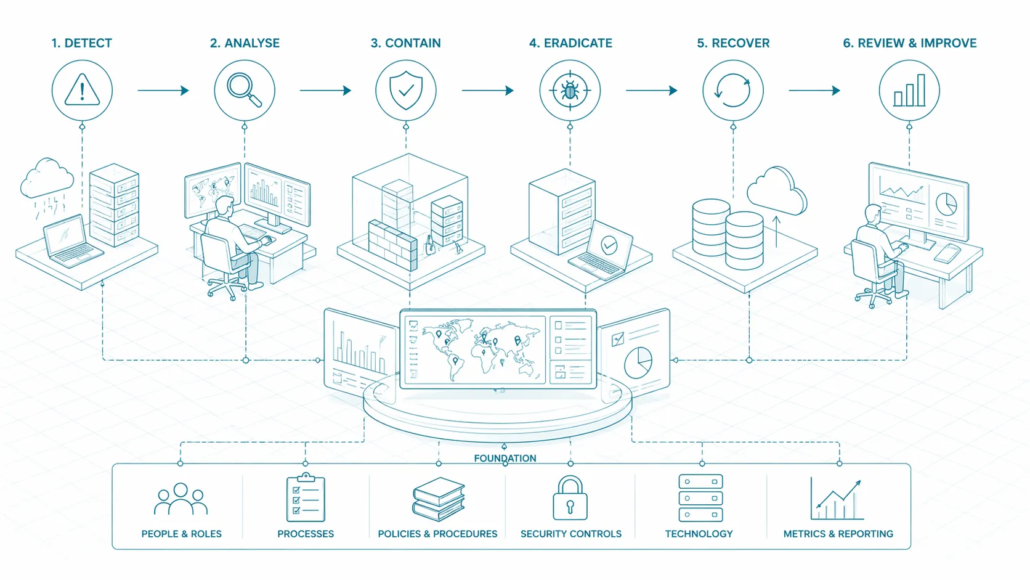
FMIS maintains defined processes to manage incidents and ensure continuity of service. This includes structured incident management, continuous monitoring and response, and defined business continuity and recovery arrangements designed to identify issues quickly, minimise impact, and restore normal operation in a controlled way.

If you have questions about security, data protection, or require documentation for a review, get in touch with our team.
Email our team Privacy policy Cookie policy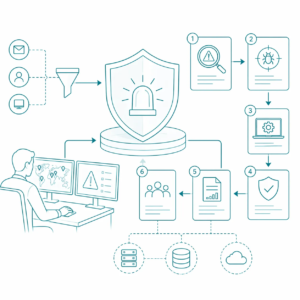
Security and operational incidents are managed through a structured process under the FMIS Information Security Management System (ISMS). This includes defined escalation procedures, integration with business continuity and disaster recovery plans, and clear responsibilities for managing and resolving incidents.

Systems are monitored to support early identification of issues. Monitoring is carried out across both the FMIS application and underlying infrastructure, with defined responsibilities between FMIS and hosting partners to maintain stability, performance, and security.
This approach ensures that issues affecting availability, speed, or security are identified and addressed promptly and consistently.

FMIS maintains controls to support ongoing system availability. This includes ISO 27001-aligned business continuity and disaster recovery plans that are regularly tested, audited, and reviewed.
These measures are designed to maintain service and support recovery in the event of disruption.
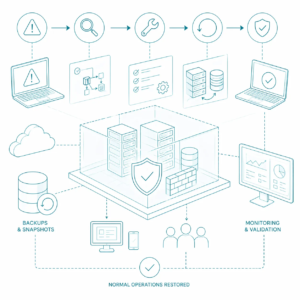
Recovery is managed through defined plans and procedures within the FMIS ISMS, including business continuity and disaster recovery (BCP/DR). The response to any incident is tailored to its nature and scope, with recovery actions applied in a controlled and prioritised manner.
Recovery arrangements are regularly reviewed and tested to ensure they remain effective.

Incident management and continuity processes are reviewed regularly.
This supports a consistent and improving approach to managing risk.
If you require additional detail on incident management or continuity processes, please contact:
 https://www.fmis.co.uk/wp-content/uploads/2026/09/FMIS-Lease-Accounting-version-12.47-product-update.webp
396
495
John de Robeck
https://www.fmis.co.uk/wp-content/uploads/2026/04/FMISNavyTeal-1-150x80-1.webp
John de Robeck2026-09-17 15:14:582026-09-17 15:15:01What is new in FMIS Lease Accounting version 12.47
https://www.fmis.co.uk/wp-content/uploads/2026/09/FMIS-Lease-Accounting-version-12.47-product-update.webp
396
495
John de Robeck
https://www.fmis.co.uk/wp-content/uploads/2026/04/FMISNavyTeal-1-150x80-1.webp
John de Robeck2026-09-17 15:14:582026-09-17 15:15:01What is new in FMIS Lease Accounting version 12.47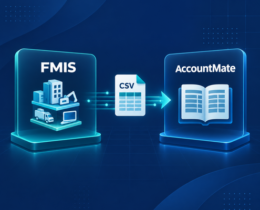 https://www.fmis.co.uk/wp-content/uploads/2026/09/FMIS-AccountMate-Integration-for-FMIS-Fixed-Assets.webp
450
495
John de Robeck
https://www.fmis.co.uk/wp-content/uploads/2026/04/FMISNavyTeal-1-150x80-1.webp
John de Robeck2026-09-09 17:48:582026-09-21 18:12:04AccountMate Fixed Asset Integration with FMIS
https://www.fmis.co.uk/wp-content/uploads/2026/09/FMIS-AccountMate-Integration-for-FMIS-Fixed-Assets.webp
450
495
John de Robeck
https://www.fmis.co.uk/wp-content/uploads/2026/04/FMISNavyTeal-1-150x80-1.webp
John de Robeck2026-09-09 17:48:582026-09-21 18:12:04AccountMate Fixed Asset Integration with FMIS https://www.fmis.co.uk/wp-content/uploads/2026/03/Book-Value-Accumulated-Depreciation.webp
450
500
John de Robeck
https://www.fmis.co.uk/wp-content/uploads/2026/04/FMISNavyTeal-1-150x80-1.webp
John de Robeck2026-08-27 12:50:062026-09-28 05:18:31Net Book Value (NBV) Explained : Formula, Calculation, and Examples
https://www.fmis.co.uk/wp-content/uploads/2026/03/Book-Value-Accumulated-Depreciation.webp
450
500
John de Robeck
https://www.fmis.co.uk/wp-content/uploads/2026/04/FMISNavyTeal-1-150x80-1.webp
John de Robeck2026-08-27 12:50:062026-09-28 05:18:31Net Book Value (NBV) Explained : Formula, Calculation, and Examples https://www.fmis.co.uk/wp-content/uploads/2026/08/what-is-capital-allowance.webp
450
500
John de Robeck
https://www.fmis.co.uk/wp-content/uploads/2026/04/FMISNavyTeal-1-150x80-1.webp
John de Robeck2026-08-27 12:49:562026-09-28 05:12:35Capital Allowances Explained: A UK Guide for Businesses
https://www.fmis.co.uk/wp-content/uploads/2026/08/what-is-capital-allowance.webp
450
500
John de Robeck
https://www.fmis.co.uk/wp-content/uploads/2026/04/FMISNavyTeal-1-150x80-1.webp
John de Robeck2026-08-27 12:49:562026-09-28 05:12:35Capital Allowances Explained: A UK Guide for Businesses
